
What It Takes to Clarify Your Message for a Shark Tank-Sized Moment
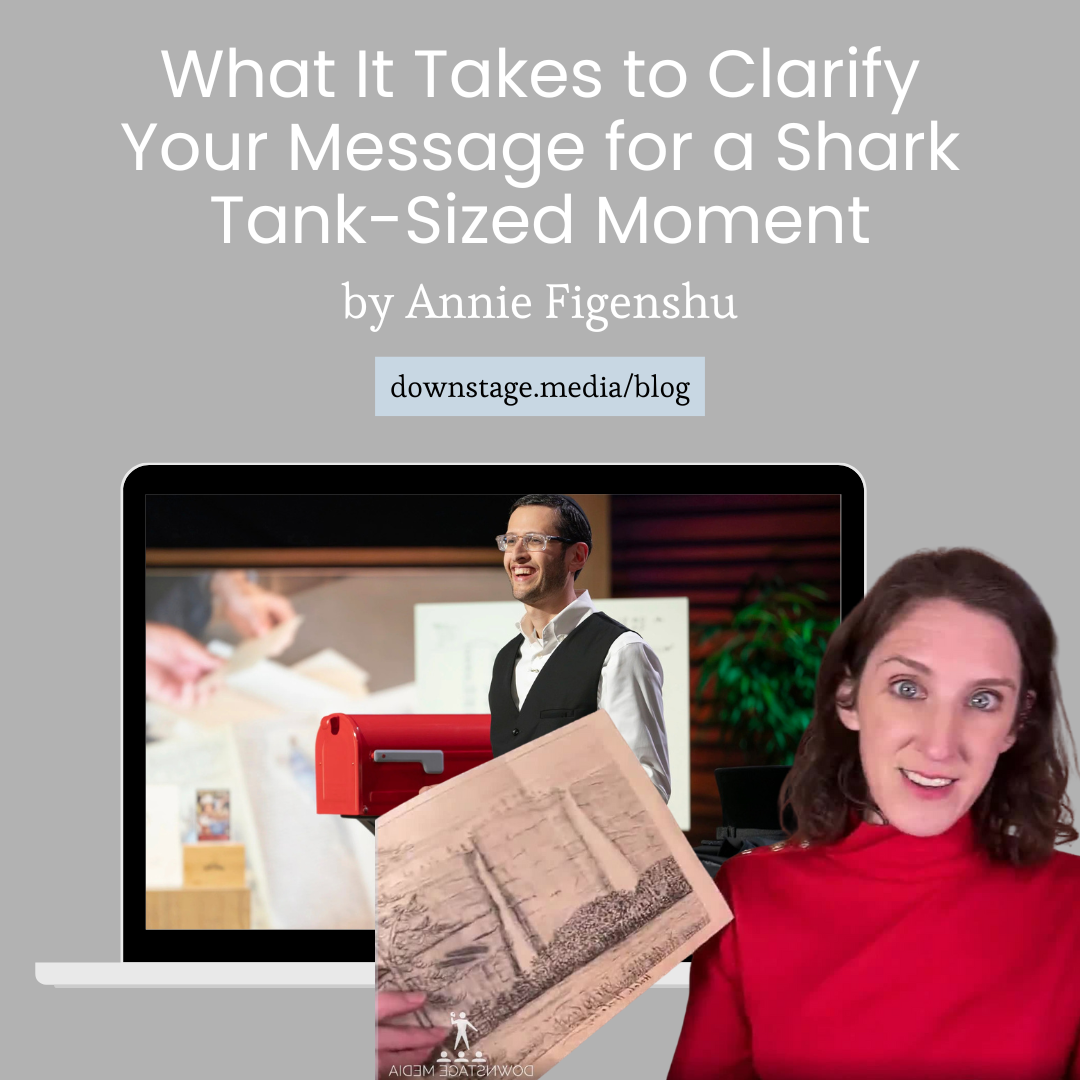
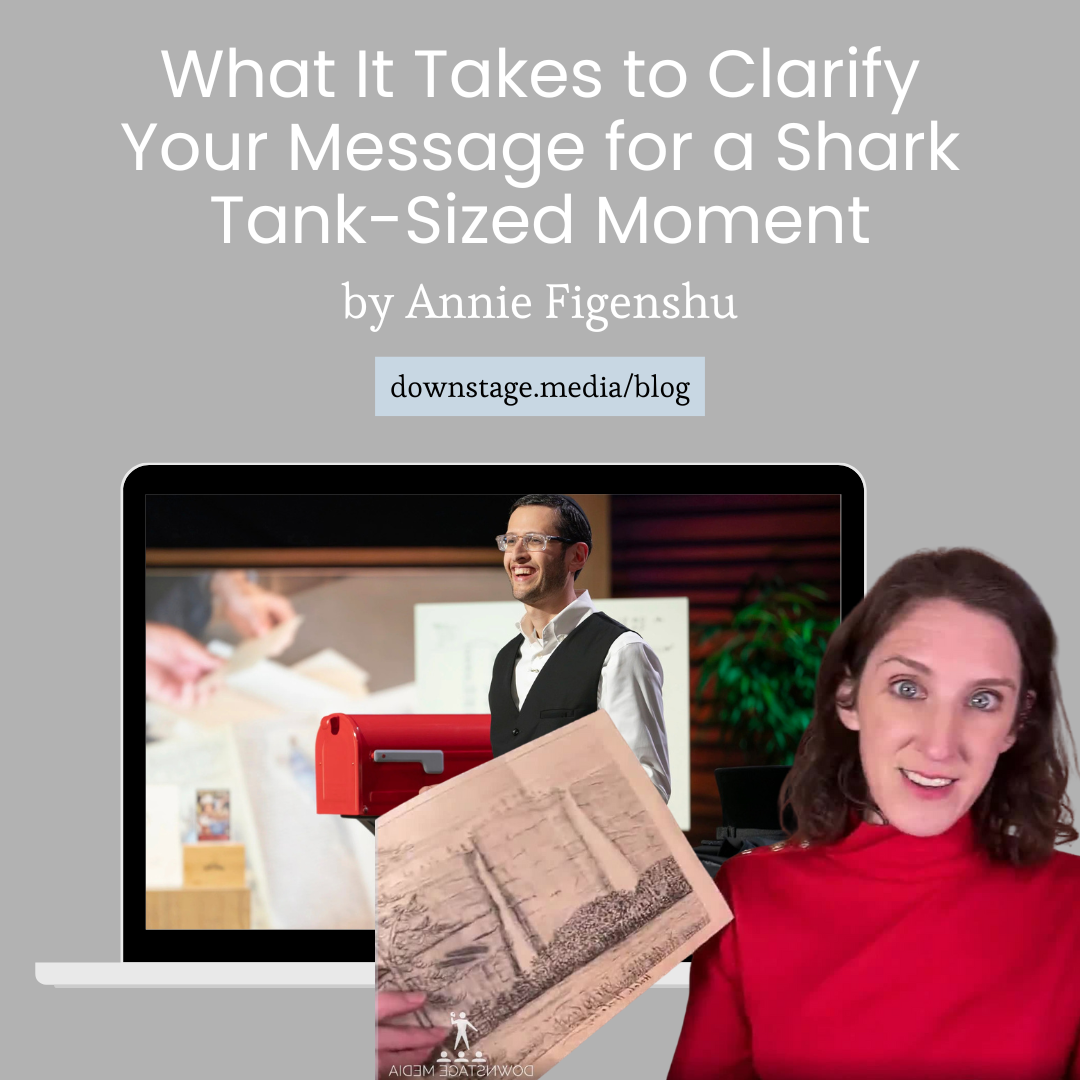
High-stakes moments don’t give you time to clarify what you meant. When a message isn’t sharp, even a strong idea can lose the room. This post breaks down how History By Mail, a Downstage Media client, prepared for its Shark Tank pitch, what happened on the episode, and what founders can learn from that process so their ideas come through clearly when it matters most.
Taking the Stage When the Spotlight is On You
Sometimes More is Just More
How We Designed a Pitch That Could Stand Up to the Pressure
When Your Message is Ready
What You Can Learn From His Pitch
“High-stakes moments shouldn’t make your message harder to understand, but they often do.”
Taking the Stage When the Spotlight is On You

History By Mail founder Ari Siegel on the Shark Tank stage after securing a deal. (Disney/Christopher Willard)
High-stakes moments compress everything. You’re speaking to people who don’t know your full story and are deciding quickly whether they understand what you do, how it makes their lives better, and how they can get it. That pressure often pushes founders to add more. More context. More examples. More explanation. The instinct makes sense, but it usually works against you.
I know that pressure well. I’ve been onstage and on camera enough times to know how quickly adrenaline kicks in and how tempting it is to say everything just in case. I’ve also seen, again and again, that the work that matters most happens before the spotlight turns on.
That was true for History By Mail. Founder Ari Siegel didn’t need a better idea. He needed a message that could land immediately in a room where attention would be limited and decisions would happen fast.
Sometimes More is Just More
On Shark Tank, there is no time to ease into your idea. The Sharks are listening for what makes your business different and whether it’s worth continuing the conversation. Everything hinges on whether the message lands right away.
Ari’s instinct was to include more. Theatrical elements. Multiple examples. Tailoring documents for each Shark.
We found in the weeks of preparation though, is that sometimes more is just more. (Something my children and now my clients have heard me say hundreds of times).
But the real work was cutting the pitch down to the essential so the idea could be understood in a split second. Less, not more.
Because that work was done in advance, the message carried. The Sharks quickly grasped the value of History By Mail, which led to a joint offer from Barbara Corcoran and Daniel Lubetzky: $250,000 for 20% equity.
When that work isn’t done, the room still decides, just without fully understanding what’s being offered. The pitch ends. The opportunity passes. And the idea never gets the chance to do its job.
How We Designed a Pitch That Could Stand Up to the Pressure
Our work together was all about making deliberate decisions before the moment arrived, so the message could do its job when adrenaline and attention were working against it.
1. Decide what the audience needs to know
We started by getting ruthless about priority. Not everything needed to be said in the opening moments. The Sharks and the viewers needed to quickly grasp what History By Mail is, why it’s different, and why it matters. Everything else could wait.
As Ari put it, the part that matters most is the initial pitch. Those first seconds determine whether people lean in or tune out.
“The part that matters most is the initial pitch,” Ari explained. That’s what gets people hooked in the first 10 to 20 seconds.”
2. Cut until the idea lands in a split second
Ari’s instinct was to include more. More examples. More theatrical elements. But more quickly became too much.
He knew the audience wouldn’t be sitting quietly, fully focused.
“You have to think about the viewer as busy people. They might be washing dishes or doing laundry, and they have to immediately understand what’s happening and get hooked.”
That reality forced a harder choice. The work became about subtraction.
“Less is more. I wanted to put everything in, but it just became too long, so I had to cut it down to the essential so people could understand what was happening in a split second.”
“Less is more. I wanted to put everything in, but it just became too long, so I had to cut it down to the essential so people could understand what was happening in a split second.”
3. Make every word pull its weight
We didn’t stop at the idea level. We worked through the language itself. The pacing. The emphasis. The sound of the words under pressure.
Ari described it this way:
We worked on making every word perfect. Being concise, not too much, not too little, so when millions of people hear it in 60 seconds, they know if they love it or not.
That level of precision matters when there’s no time for clarification.
4. Rehearse so adrenaline doesn’t take over
By the time Ari stepped into the Tank, the message wasn’t something he was hoping to remember. It had already been rehearsed, tested, and internalized. In fact, he practiced his pitch every day with life sized cutouts of the Sharks. The French word for rehearsal is repetition, and Ari took that to a whole new level.
“I had practiced thousands of times, so when it actually happened, my mind didn’t know the difference between practice and reality.”
That preparation meant the message could carry, even as all of the excitement took over.
“High-stakes moments shouldn’t make your message harder to understand, but they often do.”
When Your Message Is Ready
When your message is clear before the moment arrives, everything feels different. You’re not rushing to explain or mentally editing yourself mid-sentence. You can actually pay attention to the room and respond to what’s happening instead of trying to control it.
This kind of clarity shows up everywhere, not just on Shark Tank. It matters in keynotes, investor conversations, media interviews, sales calls, and launches. When the message has been shaped in advance, you have the freedom to be present without losing the thread. The idea comes through cleanly, even when attention is limited and the stakes are high.
That’s the difference between hoping a moment goes well and being prepared for it to do so.
Want to see how it all played out?

SHARK TANK – “1616” – Entrepreneurs pitch their innovative ideas, including a piece of history delivered, a virtual theme park experience, eco-friendly plantable pots, and a culturally unique greeting card. FRIDAY, APRIL 4 (8:00-9:01 p.m. EDT) on ABC. (Disney/Christopher Willard)
Want even more of the story? Read Ari’s recap, including what the cameras didn’t show:
I Made History on Shark Tank—Here’s What Happened
If you’re heading into a high-stakes pitch of your own, on TV, on stage, or in the room where decisions get made, remember this: clarity is your advantage. It’s what lets the idea come through when pressure is high.
If you’ve noticed that your message gets harder to explain the more a moment matters, this is the work to do next.
The BrandScript Starter Package helps clarify what you do, who it’s for, and why it matters, so your message holds whether you’re pitching, presenting, or responding in real time.
Schedule a call to talk through your message and see if the BrandScript Starter Package is the right fit.













Content is easier to create than ever, and audiences are skeptical of its authenticity. If brands don’t adjust, their content will continue to be ignored. This post shares insights from The Marketing Algonquin, a private roundtable of New Jersey-based marketers, on the shift from creation to curation so your content earns what’s hardest to win: audience trust.