
Why Your Network Matters When Budgets Are Tight
Budgets are tighter, trust is harder to earn, and content alone doesn’t carry the same weight it used to. This post explores why your network has become part of what clients are really buying, and how intentional relationship-building increases trust, retention, and long-term value.
Why Trust Feels Harder to Earn Right Now What Changes When the Network Becomes Part of the Value How to Build and Maintain Relationships That Support Your Clients Make Relationship-Building Weekly Be a Helpful Member of Curated CommunitiesLook for Where Your Work Connects Build a Network to Build Your Value“Most amps go up to ten. These go to eleven.” This Is Spinal Tap.
“We both like soup.” Best in Show.
“It’s the day of the show, y’all.” Waiting for Guffman.
These are all iconic lines from beloved Christopher Guest movies. (Leave your favorite in the comments!)
One reason audiences love Guest’s films is that he often works with the same people. When you sit down to watch one of Guest’s movie, you don’t always know what the plot will be, but you do know who’s likely to show up. Catherine O’Hara. Eugene Levy. Michael McKean. Familiar faces, shared rhythm, proven chemistry.

L-R: Rob Schiffmann, Stefan Schick, Annie Figenshu, Rick Hip-Flores, and Joe DeGise in the award-winning improv show, Chicago City Limits. 2008.
Even when the premise is new, you trust the movie because you trust the ensemble.
I felt that same dynamic years ago when I was performing with Chicago City Limits. We were doing upwards of five shows a week, and operated as a true ensemble. We knew when to step forward, when to support, and who to spotlight based on their strengths. Audiences weren’t buying tickets to see one performer. They were buying into the group. We even won a couple of MAC Awards for Best Improv Group, largely because that chemistry was palpable and consistent.
People knew what they were getting, even when every show was different.
That idea matters even more now. With AI making it harder to tell what’s real, original, or human, the people you’re surrounded by have become part of how trust gets established. Your ensemble, the collaborators, peers, and standards you’re associated with, quietly signals credibility.
Why Trust Feels Harder to Earn Right Now
Companies are making more careful decisions than they did even a few years ago. With budgets tighter and fewer chances to recover from a bad call, leaders are looking for signals that reduce risk before they move forward. Familiarity, credibility, and context now carry more weight than novelty or bold promises.
“When budgets shrink, your network becomes a part of what clients are buying.”
If you’re the face of your brand, that shift can feel unsettling. The work is solid. The experience is there. And yet conversations take longer to warm up. Sales cycles stretch out. You may find yourself offering more explanation or reassurance than you used to, just to get to the same starting line. It’s easy to wonder whether you’re doing something wrong, or whether the market has simply become harder to read.
The reality is that the ground has shifted. AI has made it easier than ever to produce content that looks confident and polished, regardless of whether there’s real expertise behind it. At the same time, trust in information itself has grown more fragile. Research from the Edelman Trust Barometer shows that many people are less likely to trust artificial intelligence or feel comfortable with how businesses are using it.
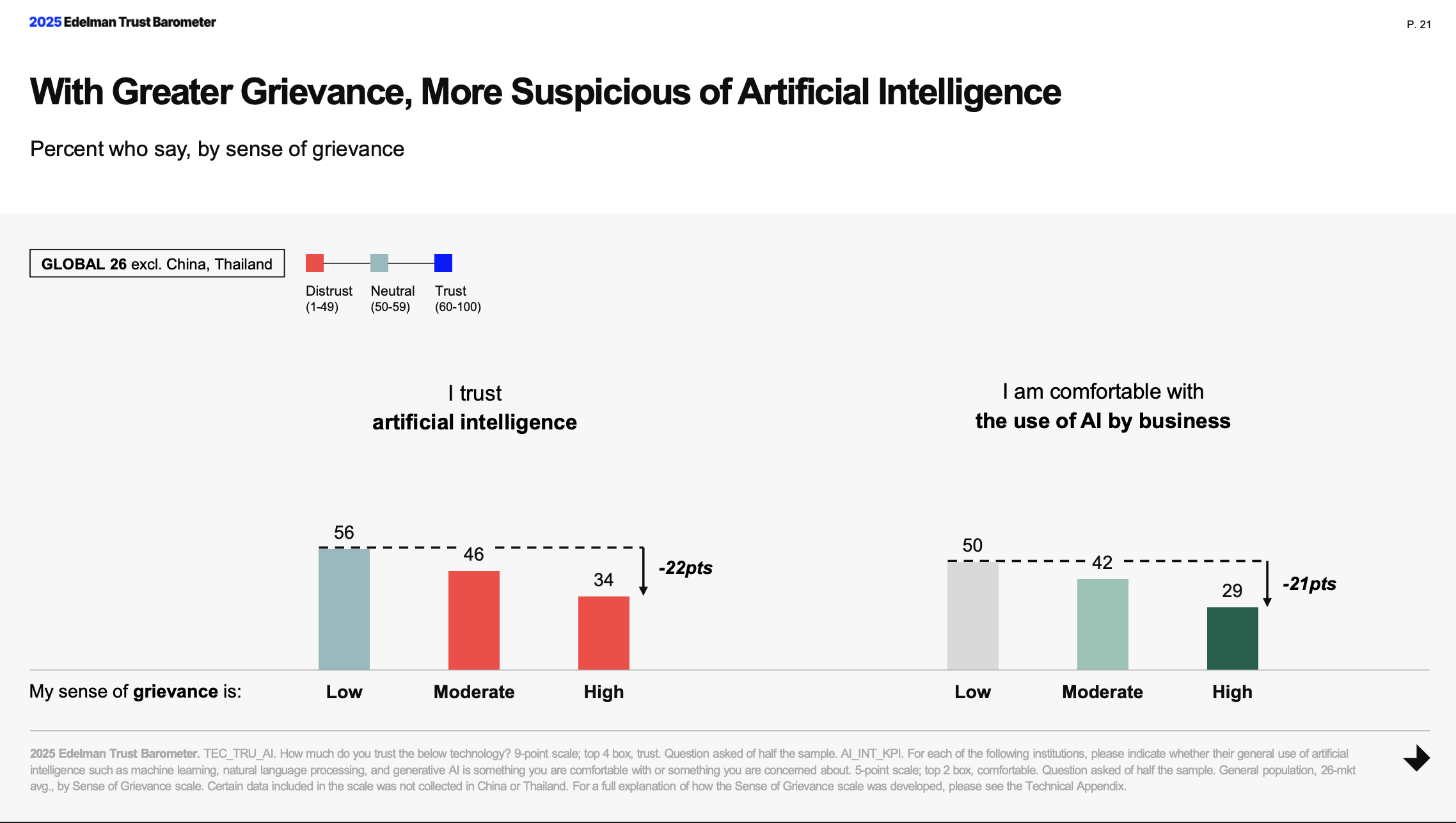
Data from the 2025 Edelman Trust Barometer shows that trust in and comfort with AI declines as people feel more uncertain and aggrieved, reinforcing why human relationships and trusted networks matter more than ever.
When people don’t trust the systems producing content, they’re less likely to trust content on its own. Even good work now needs more context before it feels credible.
That makes the old advice, “just do good work and it will speak for itself,” feel quaint. It assumes a level of certainty that many buyers just don’t have right now. Trust rarely comes from what you say in isolation. It comes from who’s willing to stand next to you.
This is something I navigate constantly in my own work. I’m deliberate about who I collaborate with and whom I refer, not because I’m trying to narrow the circle, but because shared standards matter. I choose to work with people who are certified in Mailchimp and StoryBrand because those credentials signal a common language, a baseline of rigor, and a commitment to doing the work well. When someone enters a conversation through a trusted relationship or a shared standard, decisions come faster. Confidence shows up earlier. And clients can feel it.
The same principle applies to your business. Your network isn’t just background context. It’s part of how trust gets established in an environment where certainty is harder to come by. When credibility transfers through people and shared standards, it fills the gap that content, credentials, or visibility alone can’t always close.
What Changes When the Network Becomes Part of the Value
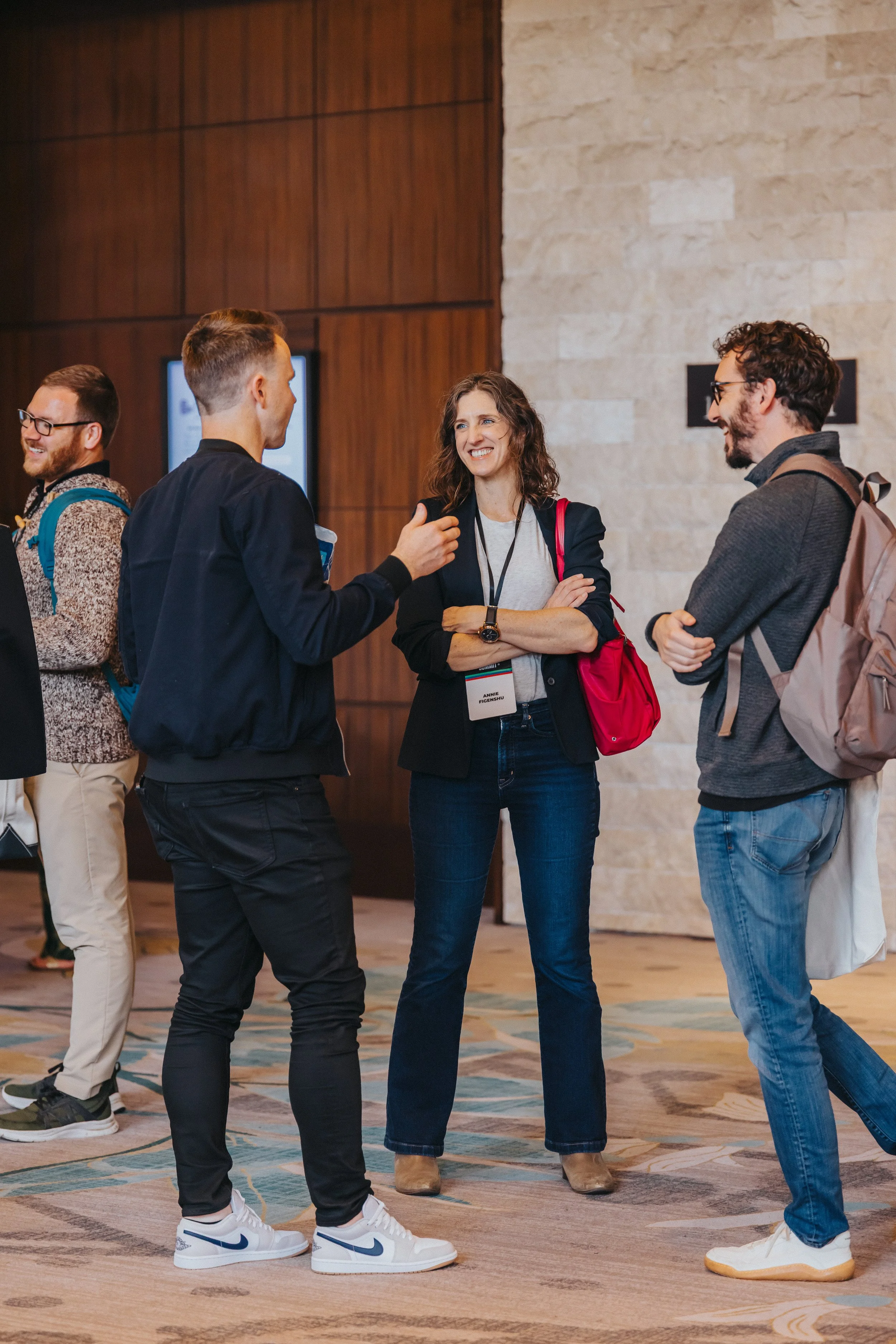
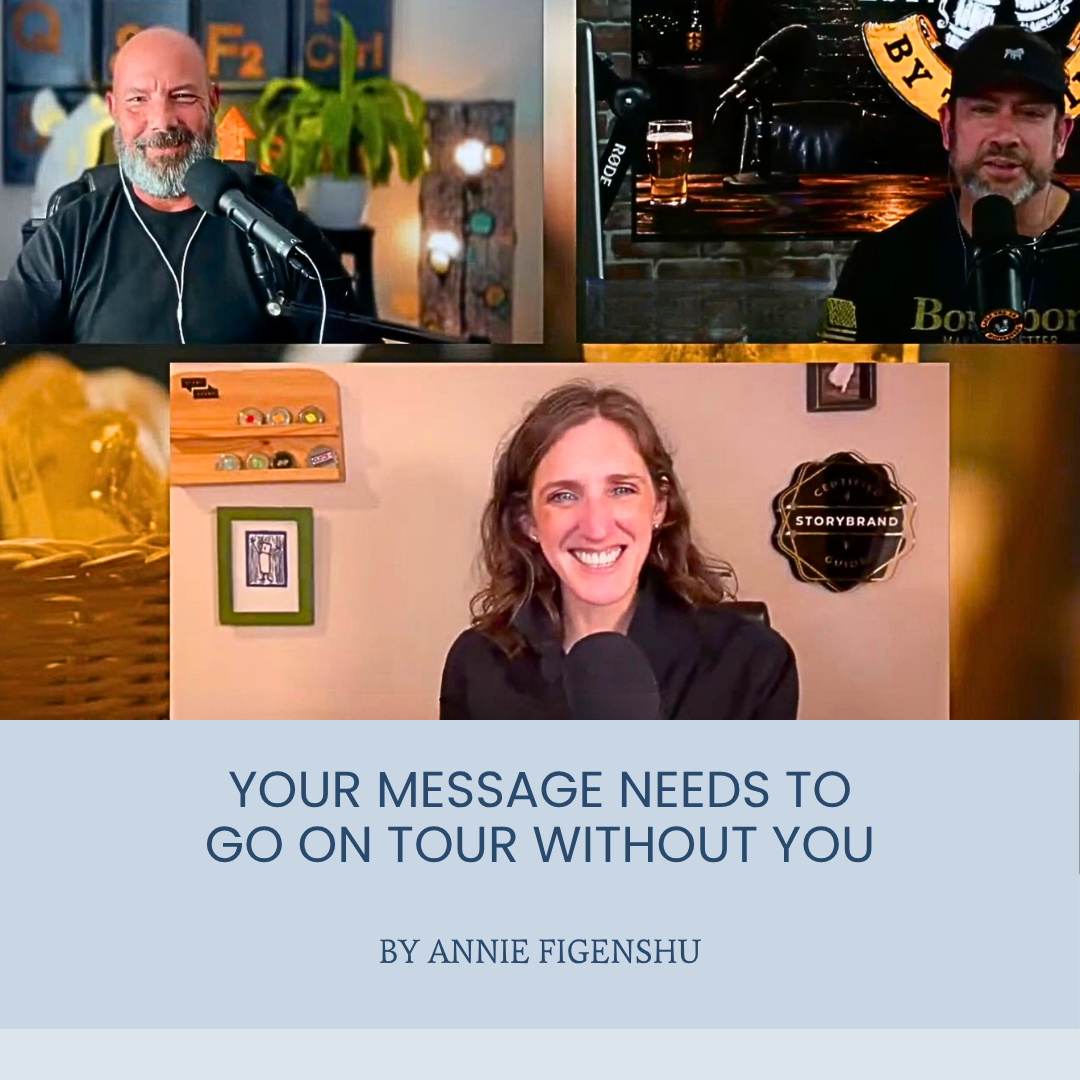
Annie Figenshu in conversation with other StoryBrand Certified Guides at the Coach Builder Summit, 2025.
When clients see who you choose to surround yourself with, the relationship shifts. All of a sudden, the company that you keep becomes a bonus.
Clients stay longer because working with you doesn’t just solve a single problem. It brings them into proximity with a broader circle of people, ideas, and standards you’ve intentionally aligned yourself with. Over time, that network becomes part of the value. Replacing you wouldn’t just mean finding a new vendor. It would mean giving up the connections that come with your choices.
The same dynamic shows up at the start of the relationship. When your name is consistently associated with people and frameworks you’ve chosen carefully, trust forms more quickly. Prospects aren’t evaluating you in isolation. They’re taking cues from who you work with and what you align yourself with. That borrowed authority lowers resistance, shortens sales cycles, and makes saying yes feel like a safer decision.
This is why a strong network does more than support your work. It reflects your standards. It signals how you operate. And it increases your value in ways content alone can’t, giving clients a reason to stay and new prospects a reason to trust you sooner.
How to Build and Maintain Relationships That Support Your Clients
Building a strong network isn’t about one-off outreach or transactional introductions. It’s about showing up regularly, being genuinely useful, and understanding how your work connects to others’ work over time. When you invest in relationships consistently — even before you need anything — you create a network that’s ready when your clients need help. That network becomes an extension of what your value is.
Make Relationship-Building a Weekly Practice
Strong networks aren’t built in bursts. They’re built through repetition. One of the most effective ways to do this is by setting aside small, regular blocks of time for relationship-building activities (RBAs).
I don’t like to beat myself up to do it every day, so I like to take a “more often than not” approach.
I aim to spend thirty minutes on my RBAs more often than not during the course of the week. So usually that winds up being three times a week. In my book Simple Social Media, I talk about relationship-building activities on social platforms. This is an extension of that same idea, applied more broadly. Consistency matters more than intensity. When relationship-building activities become part of your normal rhythm, it stops feeling like a task and starts feeling like maintenance.
Be a Helpful Member of Curated Communities
Not all communities are created equal, and the goal isn’t to be everywhere. It’s to be present in spaces where there’s already a shared baseline of values, standards, and seriousness about the work. Curated communities create context. They make it easier to understand how people think, what they care about, and how decisions get made.
A simple framework for building and maintaining business relationships that support your clients over time, not just when you need something.
In those environments, contribution matters more than being a big shot. Being helpful might look like sharing a relevant resource, offering perspective based on your experience, or making a thoughtful connection between two people who should know each other. When you show up consistently in this way, people start to recognize your judgment and your approach. Trust builds not because you’re promoting yourself, but because you’re adding value in a room that already signals quality.
Over time, that presence does quiet work for you. When clients or collaborators see where you spend your time and how you participate, it reinforces the standards you operate by. In a moment where credibility matters and trust feels harder to earn, being a helpful member of the right communities becomes one of the clearest signals you can send.
Look for Where Your Work Connects
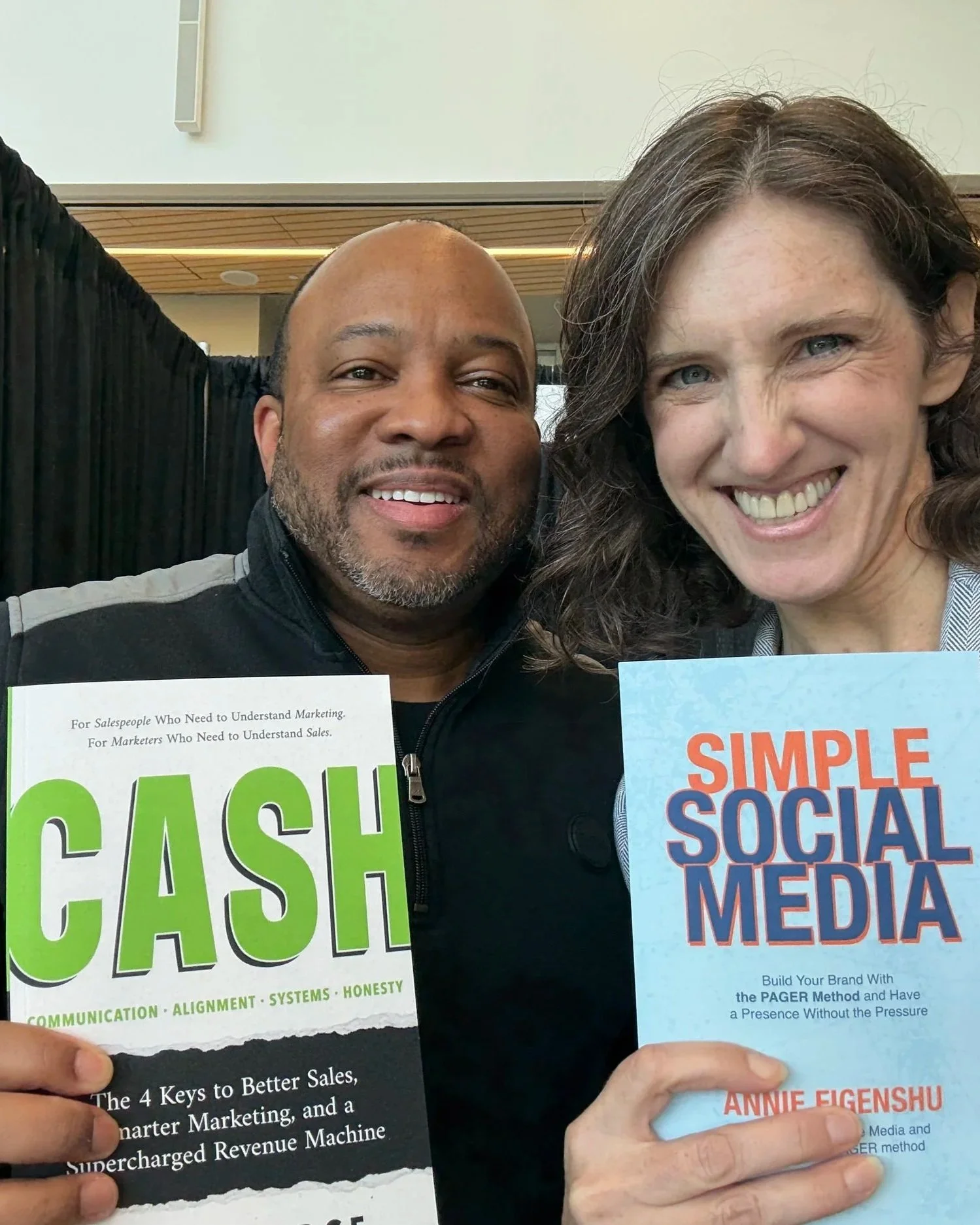
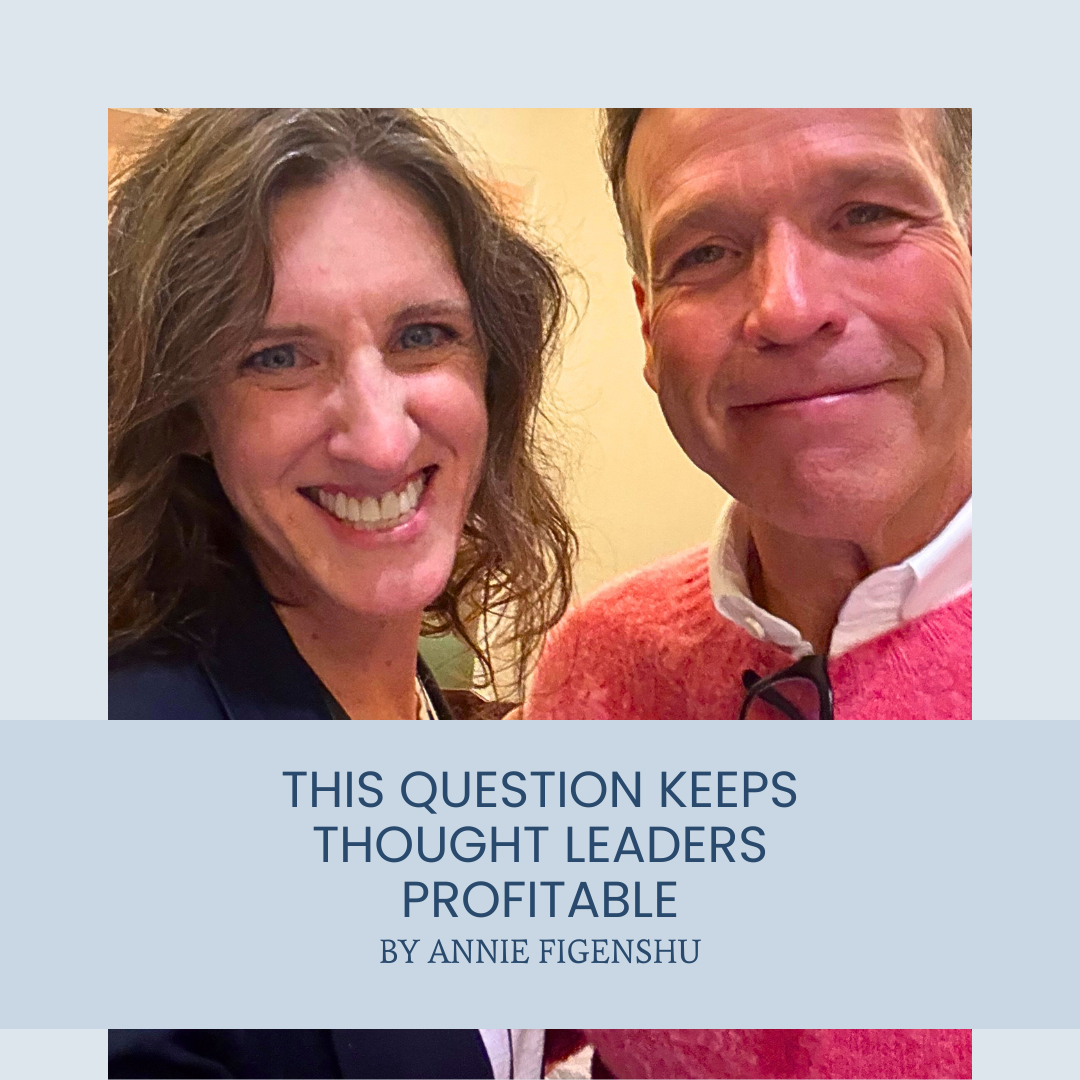
Annie Figenshu and A. Lee Judge at a book signing during the Content Entrepreneur Expo. Events, obviously, are great places to build relationships.
One of the most overlooked parts of relationship-building is paying attention to where your work naturally fits alongside someone else’s. Not in a competitive way, but in a practical one. Sometimes your engagement starts right where theirs ends. Other times, it’s the opposite.
I first heard this idea from A. Lee Judge of Content Monsta through a mastermind group we’re both part of. It stuck with me because it shifts the focus away from “who gets the work” and toward what actually serves the client best. When you understand how your work fits into a larger ecosystem, referrals stop feeling forced.
That kind of clarity makes collaboration easier, helps clients move forward without losing momentum, and turns your network into something that actively supports the people you serve.
When Budgets Shrink, Your Network Becomes Part of What Clients Are Buying.
Picture this: you’re no longer trying to prove your credibility from scratch in every conversation. The people you work with understand that when they hire you, they’re not just getting your expertise. They’re getting your judgment, your discernment, and the ensemble of people you’ve chosen to work alongside.
It’s the same reason audiences show up for a Christopher Guest movie or why people came to see Chicago City Limits night after night. You didn’t always know exactly how the show would unfold, but you trusted the cast. You trusted the chemistry. You trusted that the people involved knew how to support one another and make the whole thing better.
Your business can work the same way. Your relationships are warm, current, and active. You know who to call when a client needs something you don’t personally provide. Referrals feel natural instead of forced because you’ve already thought through how your work connects to others. Clients stay longer because replacing you wouldn’t just mean finding someone new. It would mean losing access to the ecosystem you bring with you.
That kind of network doesn’t happen by accident. It’s built intentionally, over time, and in alignment with how you actually work. Just like an ensemble, it relies on trust, familiarity, and a shared understanding of when to step forward and when to support.
If you want help figuring out where to focus, which relationships matter most, and how to build a rhythm that supports both your clients and your business, that’s exactly what a strategy call is for. We’ll look at your current network, your communities, and your offers, then identify where stronger connections would create the most leverage. You’ll leave with a clearer plan for building and maintaining relationships that support your clients long after the contract is signed.
Schedule a strategy call and start building a network that makes your work more valuable, not more complicated.

















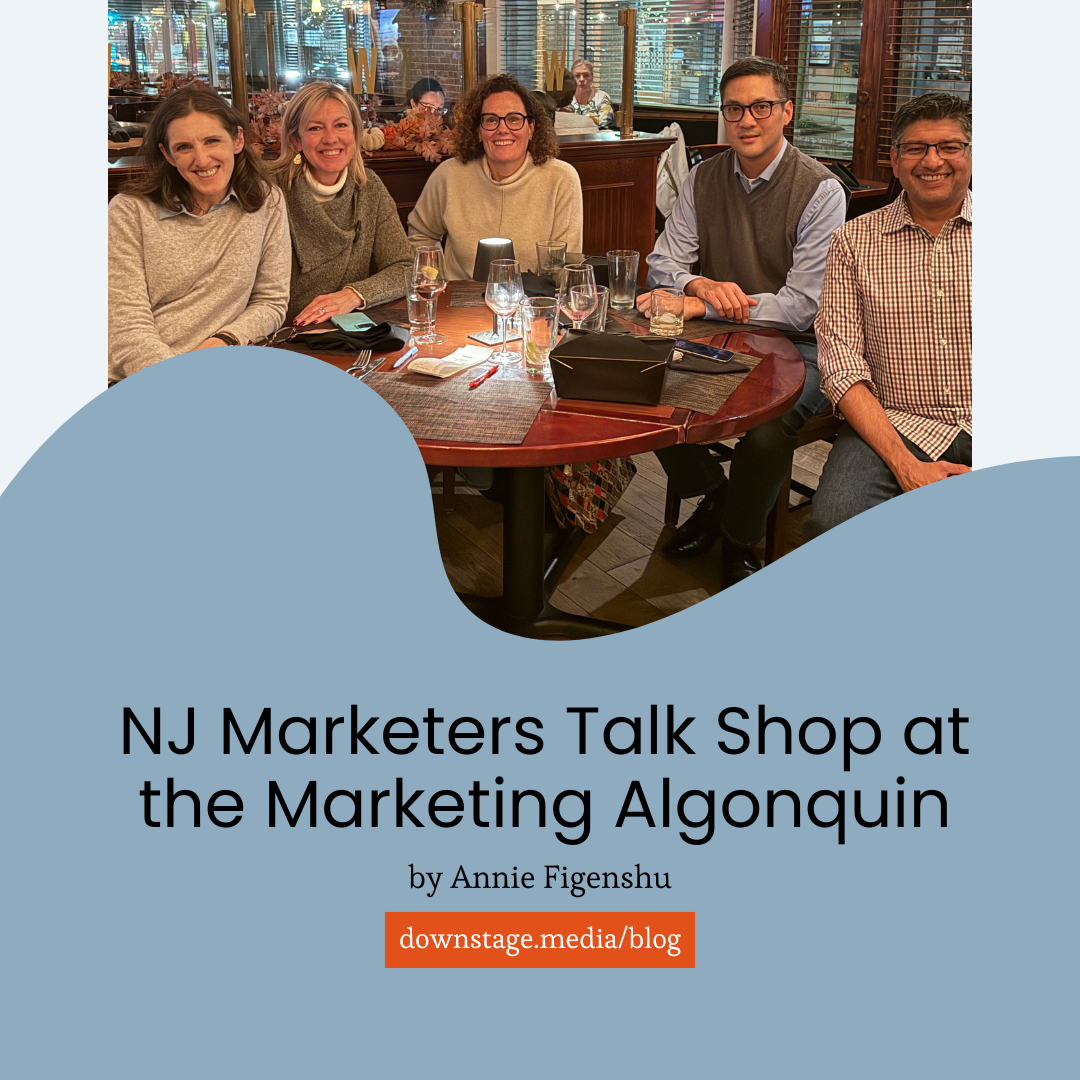

















Content is easier to create than ever, and audiences are skeptical of its authenticity. If brands don’t adjust, their content will continue to be ignored. This post shares insights from The Marketing Algonquin, a private roundtable of New Jersey-based marketers, on the shift from creation to curation so your content earns what’s hardest to win: audience trust.