
Why Thought Leaders Should Revive Their Neglected Blogs in 2026
Many thought leaders let their blogs go quiet, which means their best ideas disappear the moment they speak them. The newest research shows exactly why 2026 is the year to revive a neglected blog and how content created with strategy can strengthen authority, improve visibility, and influence AI search results. This post shows you what works now and the simple steps to bring your blog back to life.
As Your Platform Evolves, Your Company’s Blog Should Too
The Cost of Keeping the Blog As It Is
Website Platforms Prioritize AI-Ready Content
What Web Designers Are Seeing Right Now
Why AI Search Makes Your Blog More Important in 2026
What Happens When Thought Leaders Focus on Their Company Blog
When You Ask What Does This Make Possible You Lead With Intention
Build the Visibility System Every Thought Leader Needs
As Your Platform Evolves Your Company's Blog Should Too
You publish insights, deliver talks, and record podcasts. You are a visible part of your company. You create momentum.
The trouble is, when someone visits your company’s website, your blog may still look like a forgotten room of your business.
This is more common than you think. Most thought leaders are overflowing with ideas — and personality — but the blog on their company’s page is dormant or stale.
“The good news is that your neglected blog can be revived with clarity and strategy, and 2026 is the right moment to do it.”
It’s tricky.
Because you know a blog can deepen your authority.
You know it helps clarify your company’s point of view in the industry.
You know it supports your long-term discoverability. (Well, at least you think it does. But with AI and everything changing you don’t even know if anyone can really even know anymore.)
But with all of the other content — and, you well, actual work that your business requires — that has to be published, it can feel like the blog is just something else that needs to be taken care of.
The good news is that your neglected blog can be revived with clarity and strategy, and 2026 is the right moment to do it.
The Cost of Keeping Your Company Blog As It Is
A neglected or bland blog creates silent friction in your business.
You lose organic visibility.
Orbit Media’s 2025 Blogger Survey shows that publishing strategically produces stronger results than posting frequently or inconsistently.
You lose authority with the people who search for you after hearing you speak or reading your book
When your blog is outdated, your expertise looks outdated, even when your work is anything but.
You lose the opportunity to capture, organize, and scale the ideas you already create daily.
You share stories in interviews. You refine frameworks with clients. You produce insights onstage. None of that compounds unless it is captured somewhere permanent.
According to Orbit Media’s 2025 Blogger Survey, publishing more frequently correlates with stronger results, with multiple-times-per-week bloggers outperforming all other groups.
A neglected blog creates silent problems behind the scenes.
It erodes your digital presence quietly and consistently.
But committing to reviving it is powerful.
Website Platforms Prioritize AI-Ready Content
Another sign that the landscape has shifted came directly from Squarespace Circle Day 2025, which I attended with Jennifer Barden of Jen-X Website Design and Strategy. Being in the room with hundreds of designers, developers, and content professionals made one thing unmistakably clear. The conversation is moving beyond design and firmly into strategy.
In one session called How to Make Websites Rank #1 in AI Search Results, Henry Purchase from SEOSpace walked designers through how to prepare websites for AI-driven search behavior.
This is significant for thought leaders.
Platforms used to focus on templates, layouts, and visual tools. Now they are teaching creators and web professionals how to:
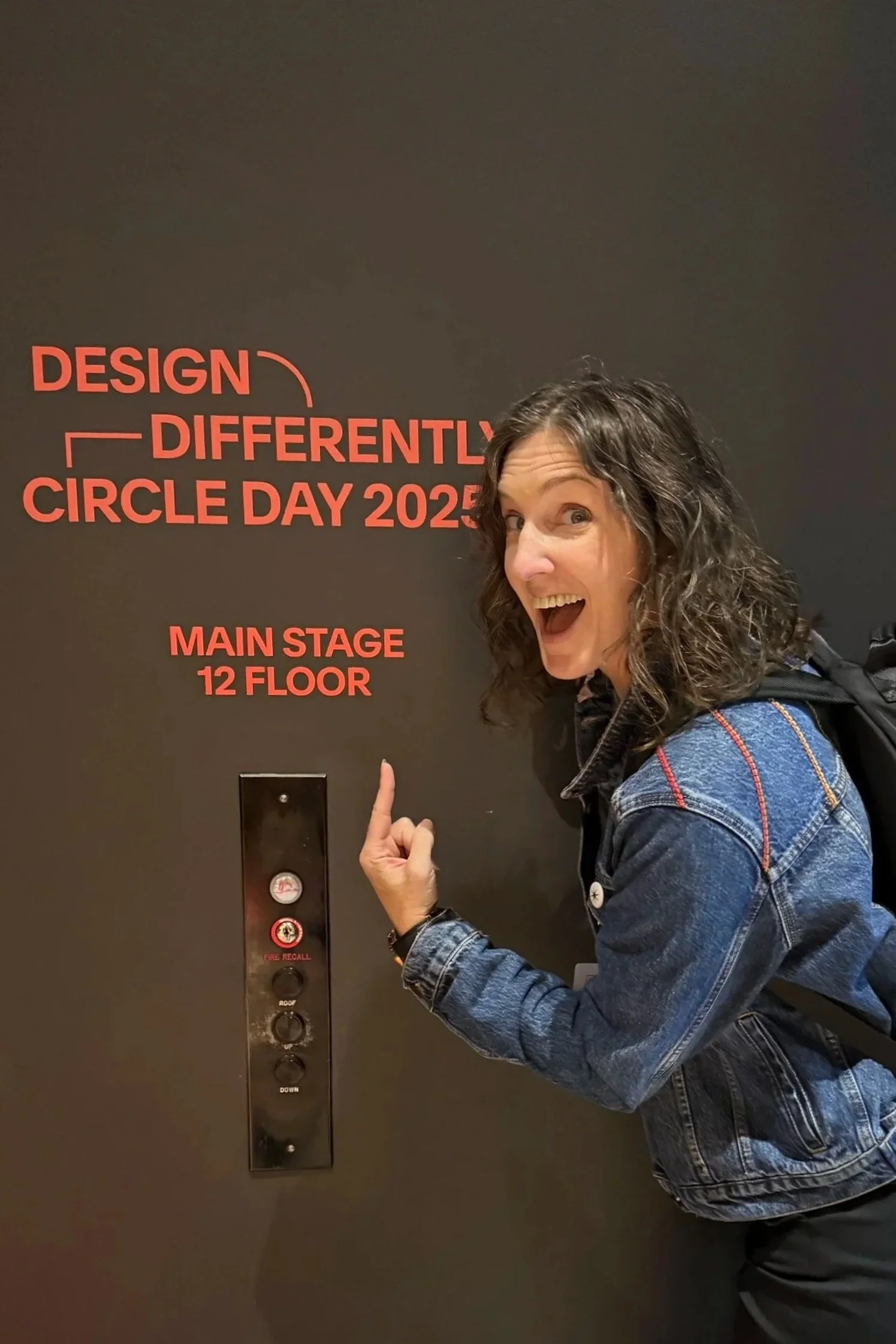
Heading up to Squarespace headquarters forCircle Day 2025, where AI search, content strategy, and website performance took center stage.
audit how AI tools find and reference your content
structure information so AI systems can understand it
build sites that support long-term discoverability
create content that aligns with emerging search patterns
Seeing this firsthand at Circle Day reinforced what the 2025 data shows.
Your website is no longer just a hub for contact information or a digital brochure.
It is part of the infrastructure that determines whether your ideas surface in Google, or inside AI assistants like ChatGPT, Perplexity, Gemini, and Microsoft Copilot.
And none of those systems will reference you if your blog is outdated, inconsistent, or empty.
Thought leadership now requires content that is
findable
structured
original
current
published in a place AI tools can easily read
Which means a paying attention to your blog is no longer optional.
It is part of the foundation for the visibility you want in 2026.
What Web Designers Are Seeing Right Now
During a recent conversation with Squarespace Circle designer Jennifer Barden, it became clear that the challenges thought leaders face with blogging are the same challenges she sees across hundreds of websites.
As she writes on her own blog:
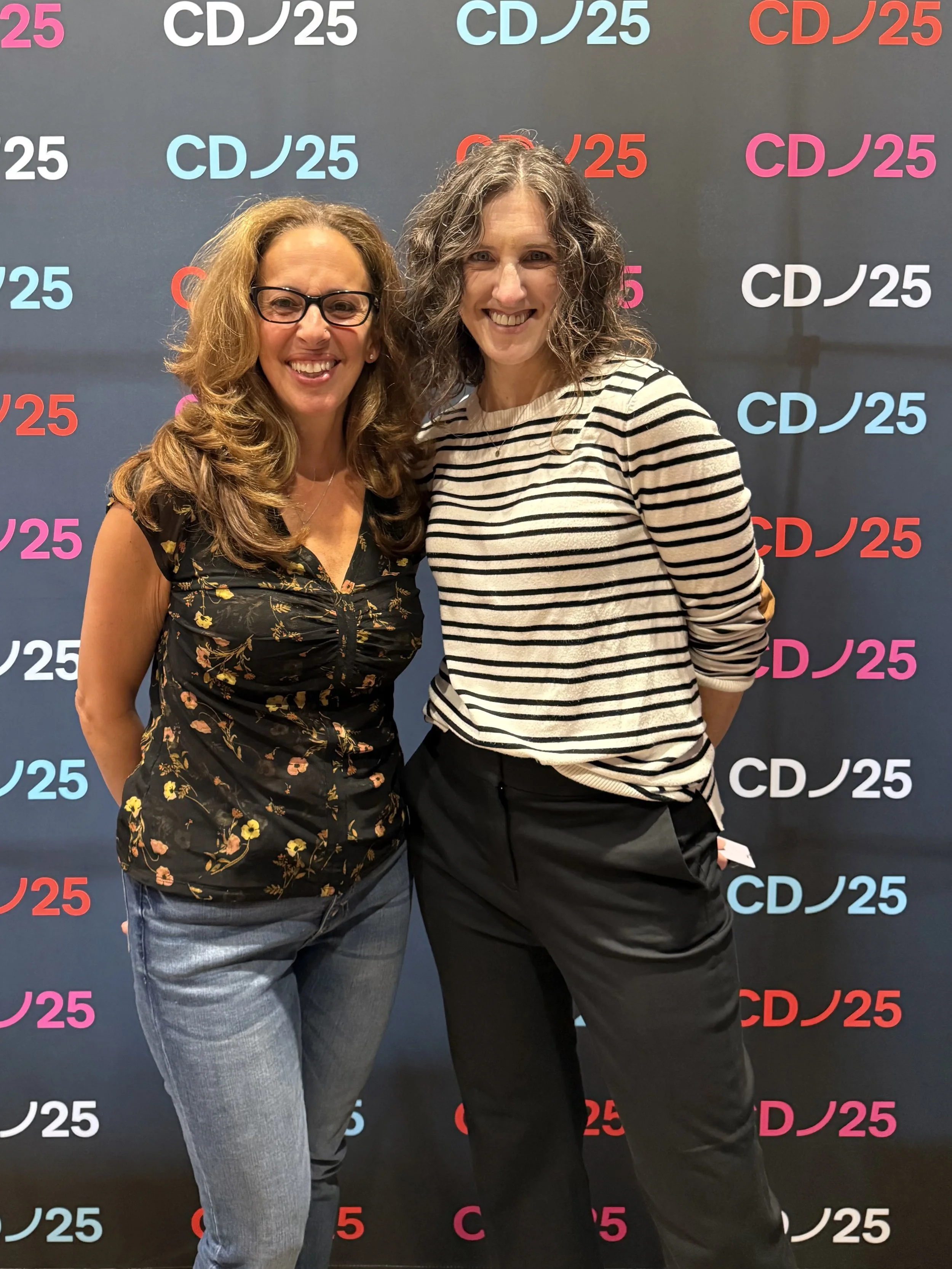
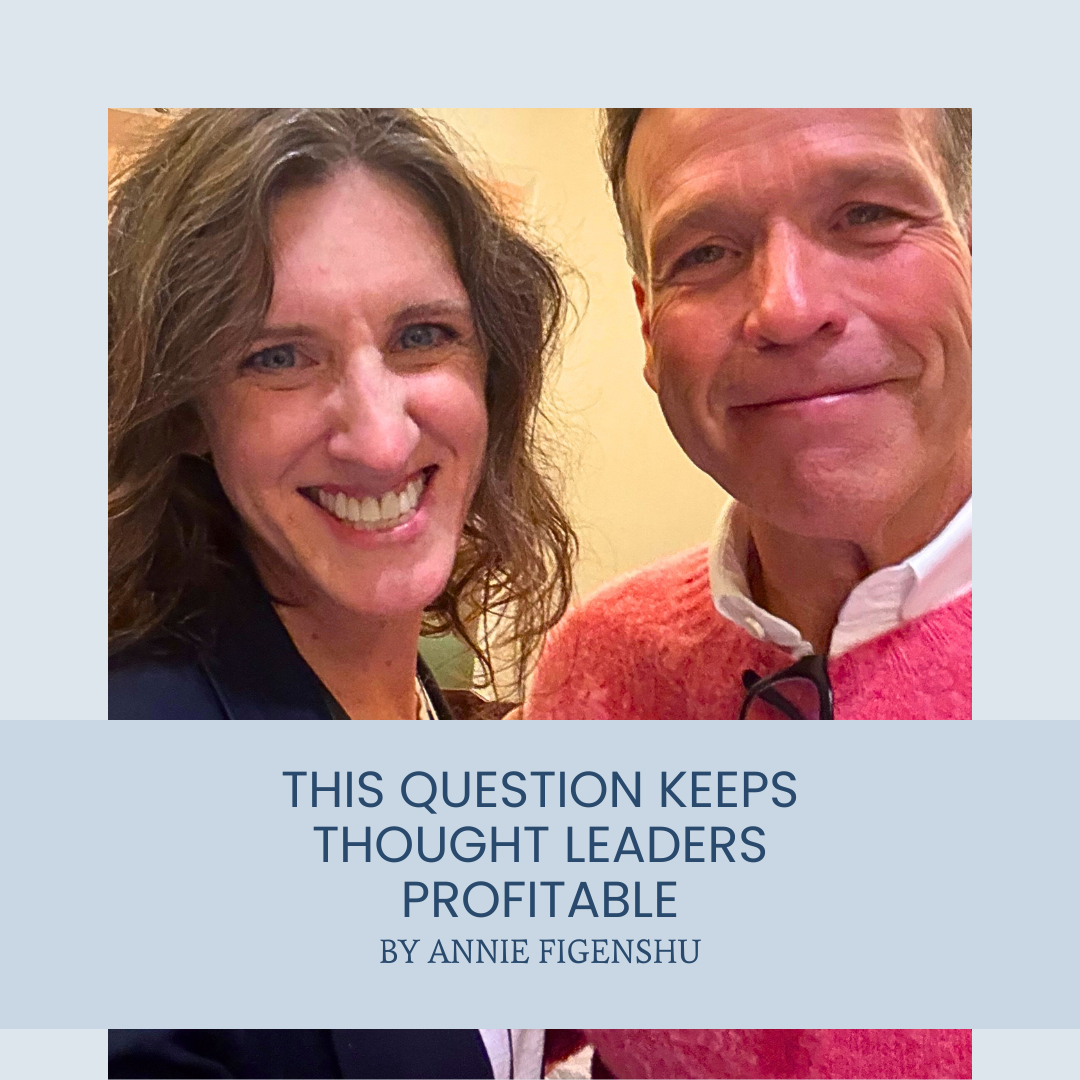
Annie Figenshu and Jennifer Barden at Squarespace Circle Day 2025, where conversations about content, websites, and strategy sparked the ideas behind this post.
“The built-in SEO features on your Squarespace website can only take you so far. If you want sustained traffic, you must create content.”
— Jennifer Barden, JenX Web Design
This echoes the 2025 data. SEO is no longer a passive feature. It is an outcome of consistent, helpful content.
She also notes:
“Social media posts fade quickly. Blog posts last longer and increase traffic over the long run.”
Thought leaders often pour their best ideas into social platforms that disappear within hours. Blogs, by comparison, compound.
And she names the challenge directly:
“Most business owners want more website traffic, but they don’t publish consistently enough to get it.”
This is not about skill. It is about structure, support, and strategy.
The Content Production Team: How to Turn Thought Leadership into a Scalable Marketing System
Why AI Search Makes Your Blog More Important in 2026
Michael Stelzner of Social Media Examiner recently wrote about the rise of zero-click behavior and the shift toward AI-generated search answers. His guidance is clear: marketers need to focus less on forcing clicks to their sites and more on influencing what shows up inside AI overviews and search results.
“Modern AI systems search the internet in real-time to supplement their responses with current information. This makes ongoing content creation and publication even more important, as fresh mentions and discussions can influence AI responses relatively quickly.”
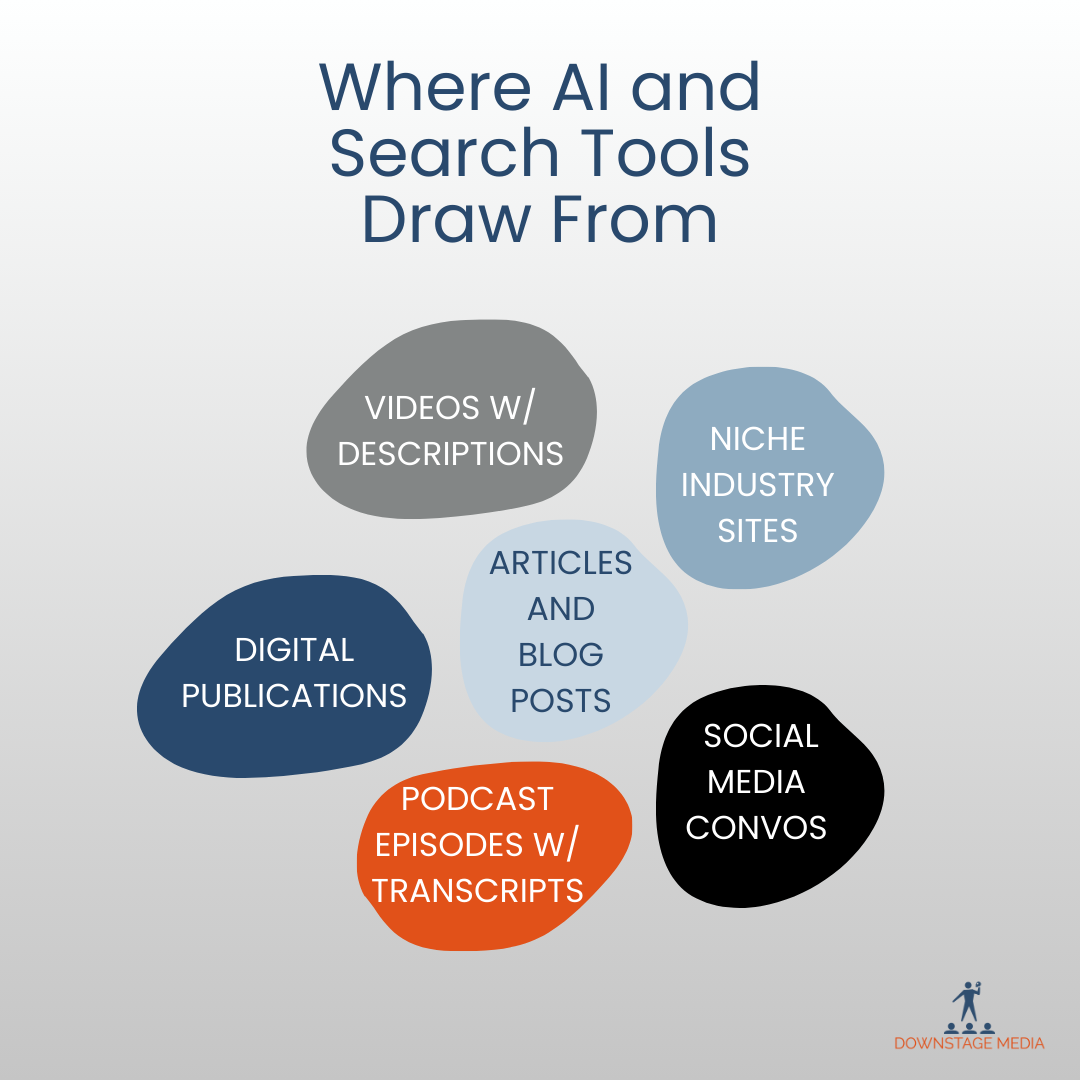
AI and search tools pull from a wide range of digital sources. A strategic blog helps anchor your expertise across all of them.
Both traditional search algorithms and AI systems rely heavily on published content across the web to shape those responses. That includes:
articles and blog posts
digital publications
niche industry sites
podcast episodes and transcripts
videos and their descriptions
public social media conversations
In other words, your ideas need to show up in the places your audience already pays attention, not only on your own domain.
Your blog is still central in that mix, though, because it is:
• the one place you fully control
• the easiest asset for others to quote and link to
• the home base you can point interviews, guest posts, and social content back to
A revived blog gives journalists, podcast hosts, event organizers, and AI systems something substantial to reference. It becomes the anchor that supports all those other mentions across the web.
What 2025 Data Means for Your Blog in 2026
The Orbit Media 2025 Blogger Survey reveals what works for modern blogging. Here is how those insights translate to your own thought leadership within your company.
1. Frequent publishing correlates with stronger results, but sustainable consistency matters most
The data shows that bloggers who publish more often tend to report stronger results. Multiple-times-per-week publishing leads across all frequency groups.
But thought leaders do not need to publish at that pace to see meaningful traction. The strongest performers also invest more time per article, collaborate with editors, add original visuals, and regularly update older posts.
Quality and consistency matter just as much as volume.
Stage Direction: Commit to a sustainable rhythm, such as one strong post per month, paired with refreshing older posts over time.
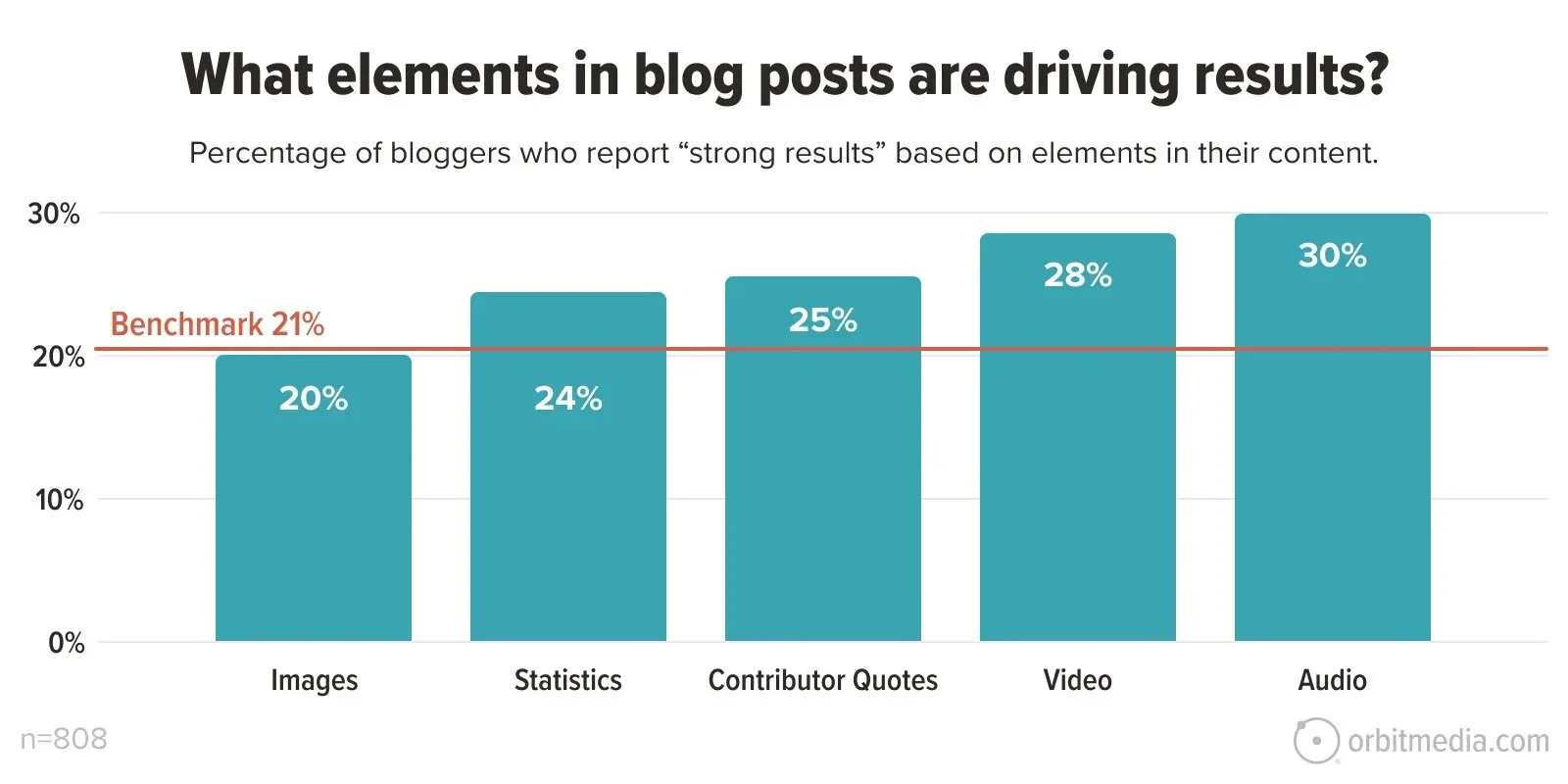
Orbit Media’s 2025 data shows that rich media elements like video, audio, and contributor quotes drive stronger blogging results than images alone.
2. Original stories and lived expertise matter more than ever
Google rewards depth, clarity, and real-world insights. Thought leaders already operate in stories, client examples, keynote moments, and research-backed ideas.
These belong in your blog.
Stage direction: Add at least one example or story to every article.
3. Original visuals boost engagement
Bloggers who create their own diagrams, charts, or models report significantly better results. As a thought leader, you already have frameworks and visuals in your talks, slides, and workshops.
Repurpose those assets.
Stage direction: Add one original visual per post.
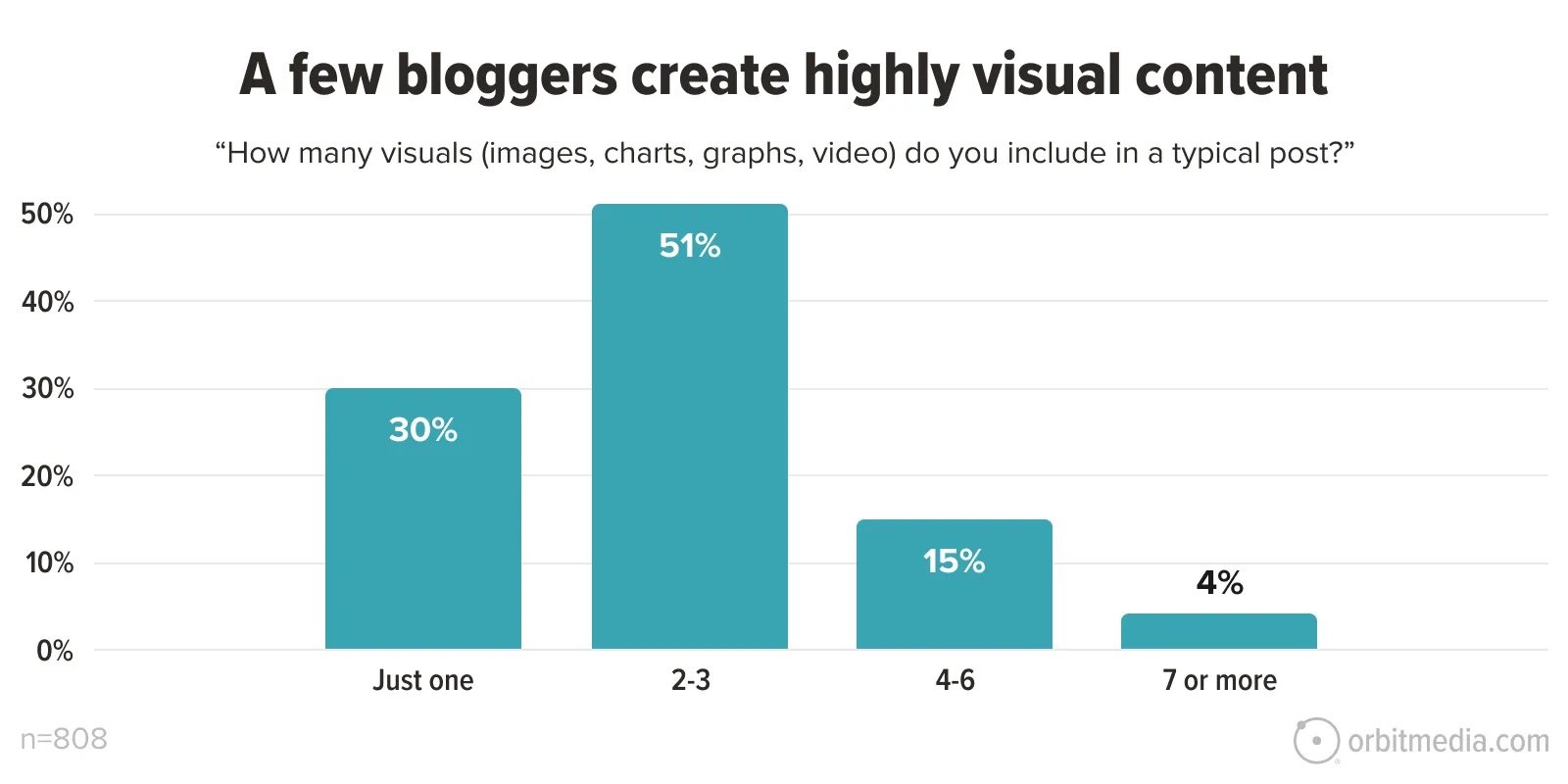
Orbit Media’s 2025 data shows that most bloggers use two to three visuals per post, while only a small percentage create highly visual content with four or more images.
4. Refreshing older posts is still a smart strategy
While the 2025 Orbit Media survey doesn’t include data on updating old content, content strategists (including Orbit in past years) consistently recommend refreshing older posts. Updated posts tend to perform well because the URL already has authority and the content becomes newly relevant.
For thought leaders, this is one of the simplest, highest-return actions you can take without increasing publishing frequency.
Stage direction: Identify five older posts that still represent your best ideas, then refresh them with new insights, stories, or clearer structure.
5. Clear roles create better content
Teams that restructure for clarity see stronger outcomes. Thought leaders benefit when they focus on ideation while someone else handles formatting, editing, SEO fields, and publishing.
Stage direction: Delegate execution. Keep the thinking.
6. Promotion is essential
Publishing alone is not enough. High-performing bloggers promote every post across multiple touchpoints.
Stage direction: Create a simple four-touch promotion ritual for each article.
What Happens When Thought Leaders Focus on Their Company Blog
A revived blog becomes a home for your expertise.
It supports your authority.
It strengthens your digital presence.
It makes you more discoverable in both Google and AI-driven search tools.
It nurtures your audience between engagements.
It gives your ideas a permanent place to live.
Your content begins to work for you instead of disappearing after you step offstage.
Bring Your Company Blog Back to Life This Year
If you want a blog that reflects your expertise, supports your authority, and positions you for stronger opportunities in 2026, let’s build the strategy together.
Schedule a Call and we will point you towards a Spotlight Strategy Session to:
audit your current content
define your three content pillars
identify high-ROI opportunities
map your next 30 and 90 days
build a workflow that matches your life
revive your older posts for quick wins
Your ideas deserve a digital presence that reflects their value.
Book your call and let’s get the show on the road.














A packed workday doesn’t necessarily mean you’re growing your consulting business. Here are three activities to make time for more often than not so you can create revenue, stay in front of prospective clients, and develop relationships that lead to new opportunities.