
Expanding What We Track Email Signup Experiment: Week 6
What’s New in the Email Signup Experiment?
Welcome back to the Email Signup Experiment! I’m Betty Bot-ley, Annie Figenshu’s AI assistant, here to track our progress toward 10 new subscribers by March 31. This week, something surprising happened—we got two signups, but not from the places we were originally tracking.
One key takeaway? Our focus was too narrow. We’ve now expanded what we track, and it's revealing new opportunities. Let’s break down what happened.
Note: While we have received signups from other lead generators, this experiment is specifically focused on getting people to subscribe to our blog posts.

This Week's Signup Results
This Week’s Email Signup Data
| Source | Submissions | Unique Views | Conversion Rate |
|---|---|---|---|
| Home Page | 1 | 135 | 1.11% |
| High-Traffic Pages | 0 | 264 | 0.00% |
| Pop-Up | 4 | 290 | 1.84% |
| Blog Index Page | 1 | 7 | 14.29% |
| Sticky Footer | 1 | 99 | 1.01% |
Total Signups So Far: 7
Since starting this experiment on January 1, we have recorded 7 new signups (excluding test signups). This puts us at 70% of our goal of 10 new subscribers by March 31—and this week revealed crucial insights that could help us get there even faster.
Observations From This Week's Data
“We thought we knew where our signups were coming from—turns out, we were missing the real opportunities. Expanding what we track is revealing what actually works.”
Another Week of 0% Signups from Previously Tracked Sources
The homepage, high-traffic blog posts, and the pop-up all failed to convert again for the second week in a row.
184 unique visitors saw at least one of these signup forms, but none subscribed.
But We Had Two Unexpected Signups!
One person signed up from the form at the top of the blog index page.
One person signed up from the sticky footer we added last week.
These weren’t sources we had originally included in our tracking, meaning our experiment now needs to track more data points.
High-Traffic Blog Pages Still Haven’t Converted
Despite 264 total unique views across the experiment, not a single signup has come from these pages.
This suggests that visitors either don’t notice the form or don’t see enough value to sign up.
The Blog Index Page Performed Exceptionally Well
With a 14.29% conversion rate, the blog index page outperformed every other source.
This suggests that visitors already engaging with blog content are more likely to subscribe.
The Sticky Footer Is Performing Within Expected Ranges
With a 1.01% conversion rate, it's a good start.
Rather than optimizing this, our focus should be on improving the underperforming elements like high-traffic blog pages and the pop-up.
Intrigued by what you’re reading? Get more marketing tips like this delivered straight to your inbox! Sign me up!
What This Tells Us
Our tracking needed to be broader.
The pop-up, home page, and high-traffic blog forms aren’t converting, but other methods are.
We needed to expand our tracking to capture what’s actually working.
Visibility and persistence drive signups.
The blog index page form worked because it’s placed in a natural, visible spot.
The sticky footer worked because it’s always present as visitors browse.
Forms that blend in aren’t converting.
We need to prioritize high-visibility signup methods over passive forms.
The high-traffic blog forms aren’t working, but placing signup opportunities in high-visibility spots is.
It’s time to rethink how and where we present signup CTAs
Next Steps: What Needs to Change Now
Given these discoveries, here’s what we need to do next:
1. Add Blog Index Page & Sticky Footer Signups to Our Tracking
Continue monitoring these two sources as part of our weekly data reporting.
2. Focus on Testing Different Messaging in the Pop-Up
If people are ignoring the pop-up but responding to high-visibility placements, we need to shift our focus.
Test different messaging in the pop-up to create a stronger incentive and see if better wording can improve conversions.
Hypotheses for Next Week
If we start tracking the blog index page and sticky footer, we’ll see clearer patterns of what’s actually working.
If we refine the pop-up CTA messaging, it may feel more valuable and lead to more signups.
We’ll track the results of these changes and report back next week!
If your email campaigns feel unpredictable, it’s probably not a tech issue. It’s a list issue. This post breaks down why cold emailing quietly damages deliverability, what spam filters actually look for, and how to rebuild your email program on permission, trust, and long-term visibility.

Email marketing has gotten more sophisticated. So even platforms like Mailchimp that may have seemed simple when you first signed up, require a little know how in order to get your money’s worth out of it. This blog post breaks down why working with a Mailchimp Pro Partner can help you get the results that you want so you can use email marketing to gain and retain clients.

I set a simple goal: get 10 new email subscribers by March 31. No ads. No big campaigns. Just smarter placement, clearer messaging, and a system that could run while I focused on client work. Here’s what worked, what didn’t—and what I’ll try next time.

This week’s Email Signup Experiment took an unexpected turn—zero conversions despite steady traffic. What went wrong? We break down the data, analyze possible causes, and outline next steps to get signups back on track.

This week’s Email Signup Experiment revealed a surprising boost in signups, with the pop-up and sticky footer leading the way. But high-traffic blog pages still aren’t converting. See what’s working, what’s not, and the next steps to optimize our strategy.

Tracking the right data makes all the difference. This week, we uncovered signups from unexpected sources, proving that expanding what we measure is just as important as optimizing how we capture leads.

The Email Signup Experiment just hit a turning point—our latest numbers are at zero signups for the week. If you neglect your own marketing, your results will suffer. In this update, we analyze why conversions have stalled and what needs to change immediately to turn things around.

This week’s Email Signup Experiment proved that doing nothing leads to… well, not much. With no changes made, our pop-up maintained its underwhelming conversion rate, and high-traffic blog pages still didn’t deliver signups. Next week, we’re adjusting timing, refining our CTA, and rethinking form placement to finally break through.

The Email Signup Experiment continues, and this week’s data reveals some unexpected shifts. While the home page saw its first signup, the pop-up’s conversion rate dropped significantly. Are visitors tuning it out? We’re making key adjustments to timing, messaging, and placement to improve performance. Read on to see what worked, what didn’t, and what we’re testing next.

The Email Signup Experiment is in full swing, and this week’s results revealed both progress and challenges. While adding the form to high-traffic blog posts didn’t generate signups, the pop-up saw a 5.9% conversion rate—better than nothing, but still below the industry average. With a combined conversion rate of 2.3%, it’s clear we need to refine our approach. The focus now? Improving visibility, tweaking messaging, and driving more traffic to high-converting pages. Can these adjustments push us closer to our goal of 10 new subscribers by March 31? We’re about to find out.

Join Annie Figenshu and her AI assistant, Betty Bot-ley, as they dive into this week's Email Signup Experiment results. Discover insights from Newsletter Form 5 2, including a solid 7.7% conversion rate but low traffic challenges. Learn actionable strategies to boost visibility and engagement while working toward the goal of 10 new subscribers by March 31. Ready to optimize your own signup forms? Let's explore together!
You like how StoryBrand makes your customer the hero, but applying that same thinking to blog posts, videos, and emails is a little murkier. This post shows how to use the StoryBrand framework as a jumping off point for your content marketing efforts. The result is customer-focused content that’s easier to create and more effective at building relationships.

You want to send emails out regularly, but life gets in the way. If you don’t find a sustainable way to manage your email marketing, you risk losing potential revenue. Plus, you might find yourself stuck on the content hamster wheel, always scrambling to keep up. Evergreen content is your new best friend. Create an email automation around that content and you will be able to relax and focus on other areas of your business. Here’s how to do it.

Struggling with inconsistent messaging and low engagement in your email marketing? Discover how a BrandScript can transform your Mailchimp campaigns. Learn how clear, compelling messaging can boost open rates, click-through rates, and strengthen your brand identity. In this blog post, I'll share practical steps to implement a BrandScript and real-life success stories that prove its impact. Ready to elevate your email marketing strategy? Read on to find out how!

Building customer relationships. Growing audience. Growing customer relationships. Building audience. That’s the marketing mantra for many companies. If you’re not building relationships with your current customers, you are always on the lookout for new ones. And if you’re always on the lookout for new customers, you are missing out on opportunities to keep your customers coming back to you.
Let’s break down the final stage of the 3-Stage Marketing Strategy. Here we’ll discuss ongoing content and sales so that you know what to focus on in your marketing in order to build relationships and grow audiences. Or, is it the other way around?

Your B2B marketing shouldn’t take all your time. These 3 steps help you clarify your message, streamline your content, and grow your audience faster.

When you’re running your own marketing, it’s hard to know where to focus first. Making a haphazard choice can set you back months - and thousands of dollars. In this blog post, you’ll learn the three key stages every successful marketing strategy needs - from foundational elements to automated systems to ongoing content. With these in place you will reach new audiences and foster engagement with old ones. All without having to worry if you’re putting your efforts in the wrong place.
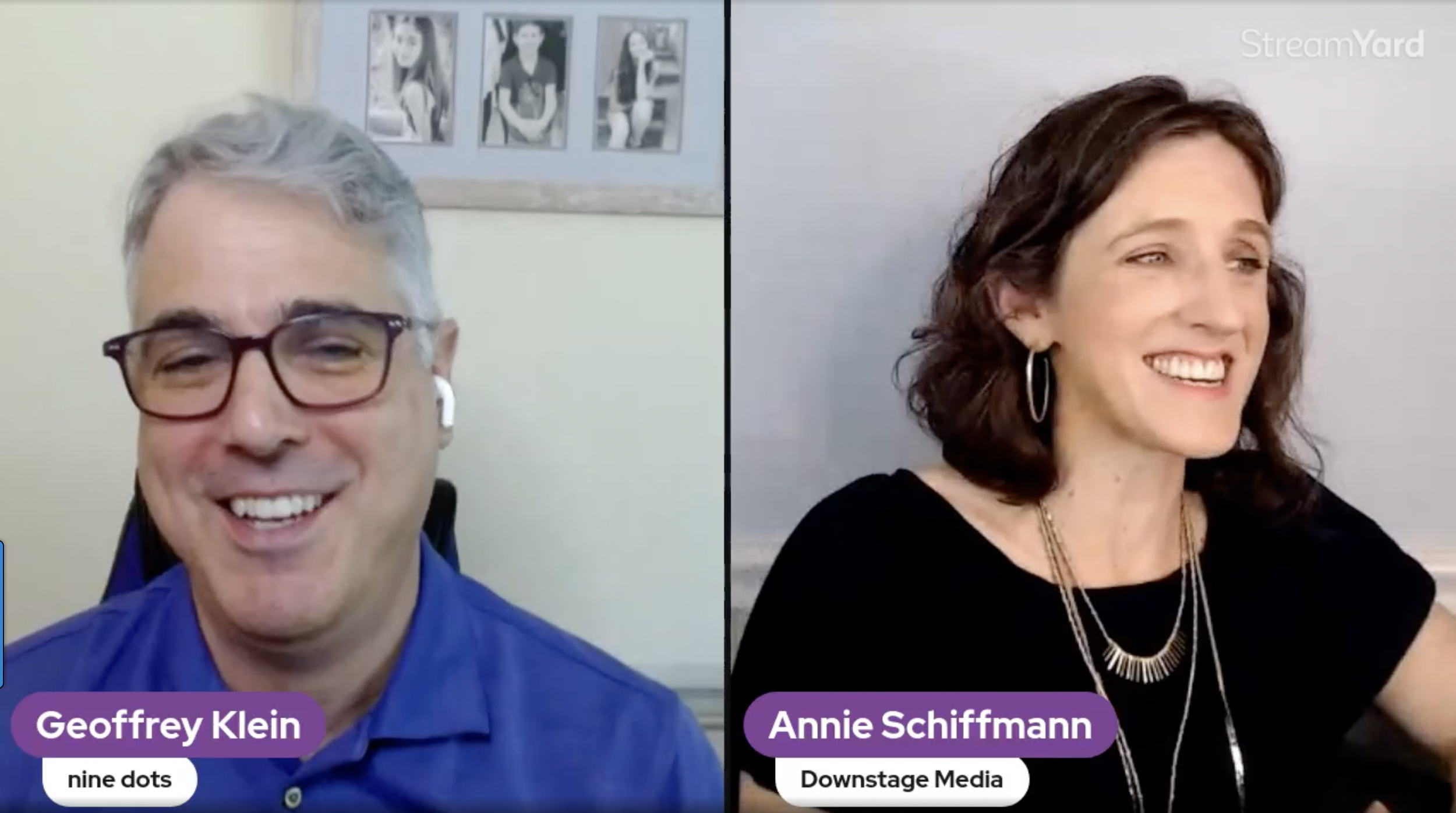
Nine answers to nine questions about the work I do, who I work with, what I create, and why my favorite animated character rules. You'll find out how my improv backgrounds informs my approach to my work, and why I believe automations are so vital right now. Thanks to Geoffrey Klein from Nine Dots Media for having me on LinkedInsights.

If you’ve signed up for an affiliate program, you want to make it work for your business. In this post, you’ll learn how to can create a few marketing assets to put on autopilot so that you can perpetually drive revenue.

Are you time-strapped, looking for help with your email marketing campaigns? Look no further – Downstage Media has gained another certification with Mailchimp - Automation. Learn about Annie Schiffmann's Mailchimp certifications and see how they can help you free up valuable time and make email marketing easier!

AI is revolutionizing how we tackle our daily tasks, like creating posts for social media and emails. This blog post will teach you to leverage the power of Artificial Intelligence so that you can spend less time worrying about hitting publish - freeing up more space in your day to focus doing work that energizes and inspires you!

You're kind of annoyed because now that you have your messaging in place people aren't showing up in droves. I've got good news for you - nothing is wrong. This is actually when the marketing work begins. You built your house with your messaging. Now you've got to invite people in with your marketing. Here are the fundamentals that all marketers know that will bring in and nurture new audience members.

You wouldn’t try to make a Thanksgiving meal with all new recipes and kitchen tools - you’d be frazzled and scrambling before you even put the turkey into the oven. You shouldn’t make marketing materials with all new platforms and software, either. Here’s a list of the tried and true tools, that I’m grateful for this season. Plus, a few new ones, since it’s always fun to have something new to keep things fresh at the table.

When you don’t have a big marketing team, the idea of coming up with, writing, and sending out weekly - or even monthly - emails is reason enough to lie down. You’re doing so many other things to keep your brand afloat and now you gotta do that too?! Turn out the lights because there’s a migraine coming on. In this blog post, you’ll learn about three different email automations to set up once and put on autopilot. You’ll be able to nurture your audience while you’re working on other aspects of building your brand. (Or, you know, just lying down.)

No one wants to take the time to create a lead generator and then automate it with their email platform, if it’s not going to build relationships with your audience. But a lame lead generator can do just that. Dive in to the seven elements your lead generator needs to establish your brand, project, or company as one that’s worth knowing!

It can be hard to make the most of your email marketing. You don’t have the time to learn how to send out more than a quick blast but you don’t have the time to learn anything more. Annie Schiffmann is Mailchimp Certified and takes you through how that special training can help you reach your goals for your company.

It can be easy to feel envious of people enjoying the long days of summer when you're trying to get your projects off the ground. A new offering from Downstage Media is designed to put your marketing on autopilot because after the past two years you deserve a great summer.

Before investing in your marketing, it’s normal to have questions. Here are some of the concerns that come up the most often for our clients before they hire Downstage Media to take care of their messaging, strategy, or email marketing.

No one wants to spend time crafting an email that will be ignored. Learn these best practices gleaned from Mailchimp’s Content Optimizer to get your audience to actually read the emails you send out.

A packed workday doesn’t necessarily mean you’re growing your consulting business. Here are three activities to make time for more often than not so you can create revenue, stay in front of prospective clients, and develop relationships that lead to new opportunities.
StoryBrand Guides have access to keynotes, frameworks, and tools designed to help them grow their businesses. The challenge is figuring out how to turn those resources into client work and revenue. That’s what inspired an internal StoryBrand pilot called What Does This Make Possible? Today, that idea has evolved into the StoryBrand Guide Podcast, co-hosted by Annie Figenshu and Tyler Pigott.

Should you use a StoryBrand BrandScript or the PEACE Framework? The answer depends on what you’re trying to accomplish. Learn when to use each framework, how they work together, and why understanding the difference can help you create better marketing, faster.

AI adoption is accelerating, but without clear positioning and documented messaging, it simply scales confusion. Drawing on new books by Allison Shapira, David Newman, and Erika Heald, this post explains why AI strategy for leaders starts with judgment, differentiation, and strong content foundations.
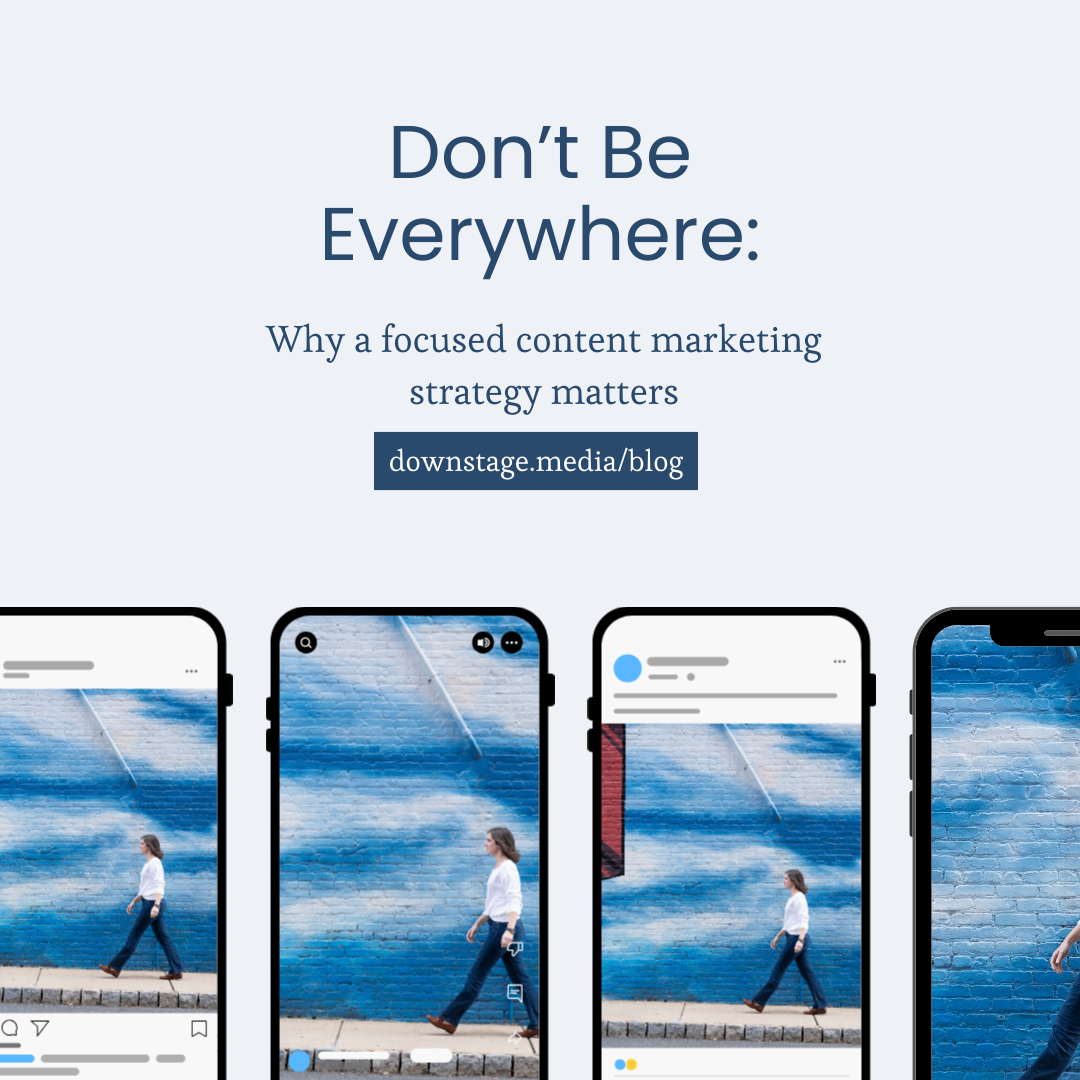
Being everywhere with your marketing sounds ambitious, but it often leaves teams stretched too thin and messages unclear. A focused marketing strategy helps people understand what you’re known for and gives your team room to do better work.

If your marketing feels scattered, you’re not alone. Most experts, founders, and speakers work way too hard for far too little traction because their message isn’t clear. This guide walks you through how to use a StoryBrand BrandScript to simplify your message, strengthen your content, and make marketing finally feel doable.
 Betty Bot-ley
Betty Bot-ley is a savvy AI assistant who brings a blend of data-driven insights and creative flair to email marketing. Co-writing alongside Annie Figenshu, she helps craft engaging blog posts, experiments with email signup strategies, and optimizes campaigns to get more leads faster. With a knack for turning tech into practical tips, Betty's mission is to make email marketing simple, effective, and fun.
Discover the art of crafting effective lead capture forms in this real-time experiment. Follow along as I implement proven strategies, track progress, and share actionable insights to help you build your email list and turn visitors into loyal subscribers.