
Your Message Needs to Go On Tour Without You
Your prospect may understand what your company does, but can they explain it to everyone else involved in the buying decision? On a recent episode of Persuasion by the Pint, I talked about how to create a message clients can understand, remember, and repeat, so your firm has a better chance of making it into the next conversation.
Table of Contents
Your message has to travel without you. The words don't have to be complicated. Give your prospects words they can repeat.Make it easier for other people to advocate for you.Let your message get into the room before you do. 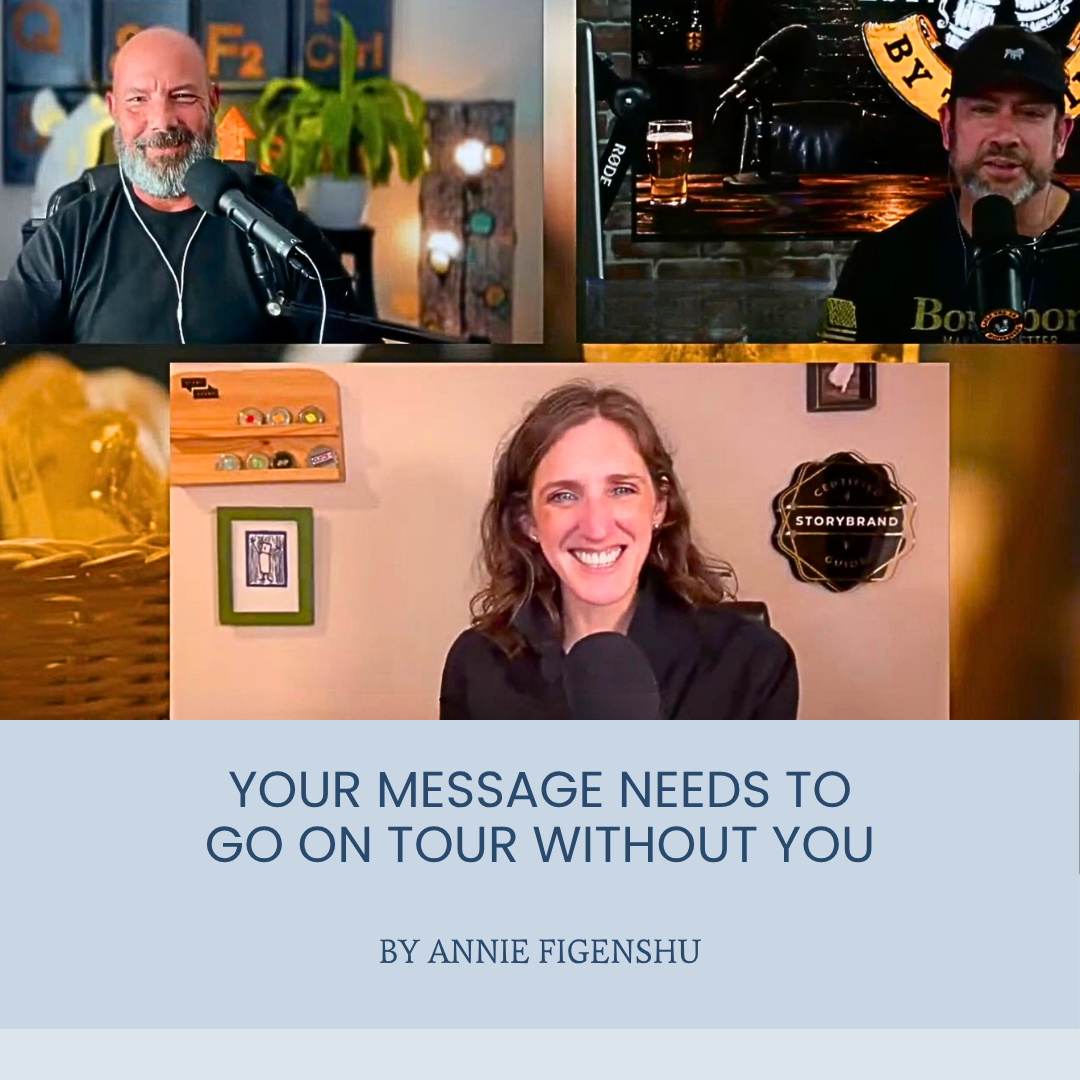
Your message has to travel without you
You have a great conversation with a prospective client. They understand your approach, see how your leadership development program could help, and ask all the right questions. You leave the meeting feeling pretty good about where things stand.
Then they walk into another meeting without you.
Maybe someone else controls the budget. So now, your contact has to explain your firm to people who weren’t on the original call. Someone asks, “So, what do they do?”
What does your prospect say?
This is one of the messaging challenges I see with leadership development firms. You offer nuanced, high-value work, but you’re often selling that work through a buying process involving multiple stakeholders. During my recent interview on Persuasion by the Pint, I talked about leadership development firms that may need approval from three or four people before an engagement moves forward.
That means your message has to keep working after you leave the room.
The words don't have to be complicated.
But I get it. It is hard to get down to the brass tacks when it comes to talking about your business.
“It’s really important that you figure out what you’re saying in a way that other people can understand, remember, and repeat.”
You probably don’t do just one thing. You might offer executive coaching, assessments, workshops, team development, facilitation, consulting, keynotes, or some combination of them. Your methodology may draw on years of research and experience, and different clients may hire you for very different reasons.
So when someone asks what you do, it makes sense that you want to give them the whole picture.
The problem is that the whole picture can become … a lot.
I saw this with one firm whose proposals had become incredibly long. There was plenty of good information in them, but even the people inside the company couldn’t consistently remember what they were supposed to say. Different members of the team were explaining the company differently.
Your leadership development work doesn’t need to become less sophisticated to solve this problem. You need to decide which words your audience needs first.
That’s a distinction I learned long before I started Downstage Media. I spent about 15 years performing professional improv, where you find out very quickly whether your words are connecting with an audience. Thousands of performances taught me to listen for what works for the audience, what people remember, and what gets a response.
Today, I apply much of that same thinking to messaging. You don’t need to communicate everything you know at once. You need to give your audience just enough to follow the story.
Give your prospects words they can repeat.
So how do you make your message easier to carry into the next room?
Start with the problem you solve.
During the podcast, I talked about choosing one problem rather than trying to account for every reason someone might hire you. You might choose the problem clients bring up most often or the one with the greatest consequences when they leave it unresolved.
For example, imagine a leadership development firm that helps new managers become stronger leaders. It could start by explaining its assessment methodology, coaching model, workshop curriculum, facilitator credentials, and research.
Or it could start here:
Your best employees keep getting promoted into management roles they were never taught how to handle.
Now I know why I should keep listening.
Next, give your prospect a simple way to describe your answer. Give them the sentence they can use when somebody else asks what you do.
Then tell them where all of this leads.
If you help new managers lead effectively, say that. If you help executive teams make better decisions together, say that. If your work helps companies retain the leaders they’ve invested years developing, say that.
Your prospect needs the basic story before they need all the supporting details.
Make it easier for other people to advocate for you.
When you get this right, your prospect easily remembers what you told them. They already have the language.
They can leave your sales call and tell the higher ups, “They help newly promoted managers learn how to lead people, so we don’t keep losing good employees because they had a bad manager.” (Maybe those aren’t your exact words. But you get what I mean.)
You’ve got to make your controlling idea strong enough that it survives the trip.
That’s why I’m less interested in whether someone can recite your tagline perfectly and more interested in whether they can communicate the idea behind it. As I explained during the interview, when you know what you do well enough to relay it in plain English, you make it much easier for other people to speak about your company when you aren’t there.
At the end of the day, your referral partners have better language to introduce you. Your facilitators describe the company more consistently. Your team knows what to emphasize at a conference. Your clients have an easier way to tell another department why they should bring you in.
Your message starts doing some of the traveling for you.
So many good ideas for your business never see the light of day. Set aside one dedicated hour to go from thinking to doing and make your business happen.

We open the doors once a quarter for new members to the Business Made Simple Accountability Group. Meeting every other Tuesday (pretty much) at 11 AM ET to share wins, solve roadblocks, and set goals. Save your spot and start making real progress toward doubling your revenue.
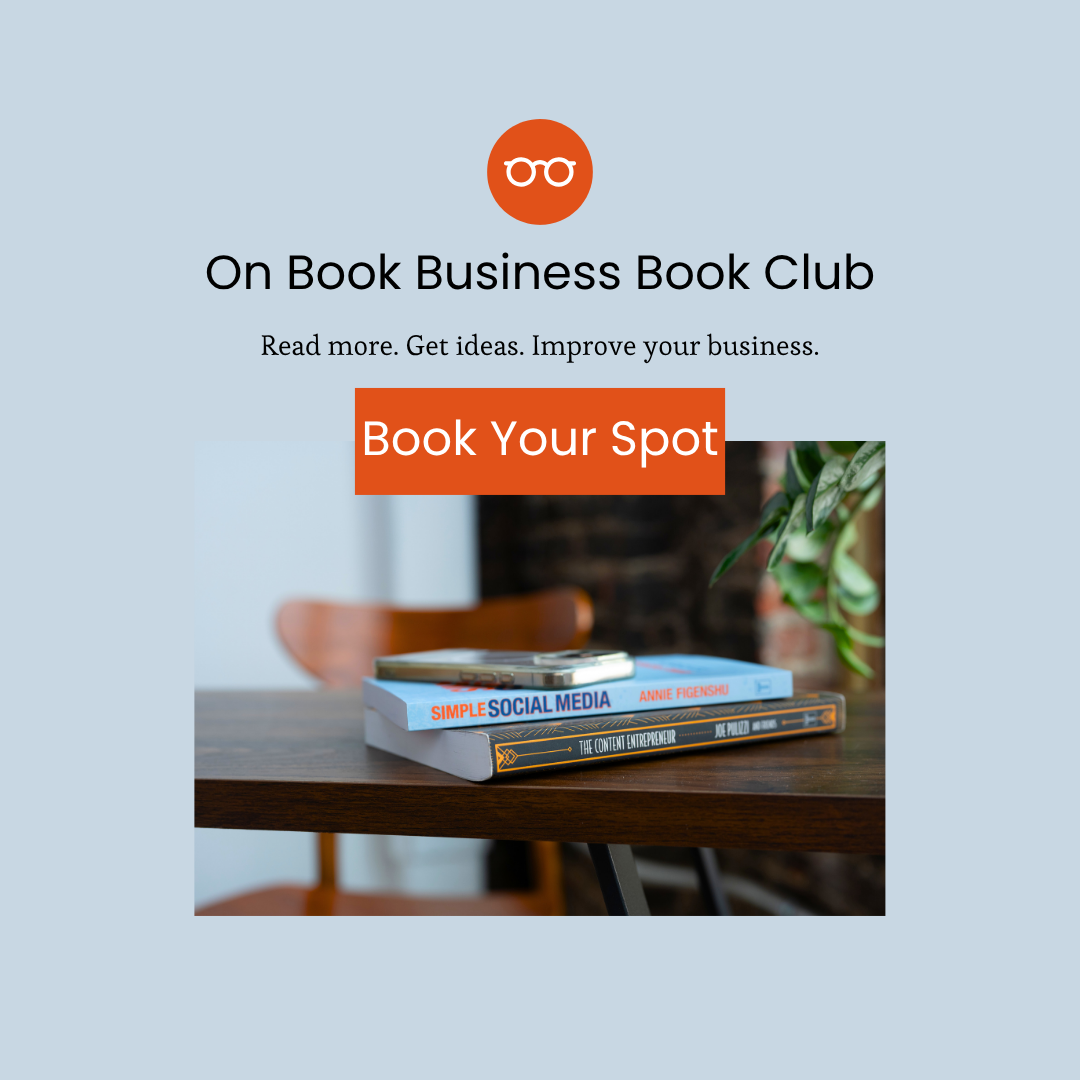
Read more. Get ideas. Improve your business.
Each month, we get together to discuss what we learned, what we questioned, and what we might actually put into practice.
October’s choice: 10X is Easier Than 2X
by Dan Sullivan and Dr. Benjamin Hardy
No judgment if you skimmed.
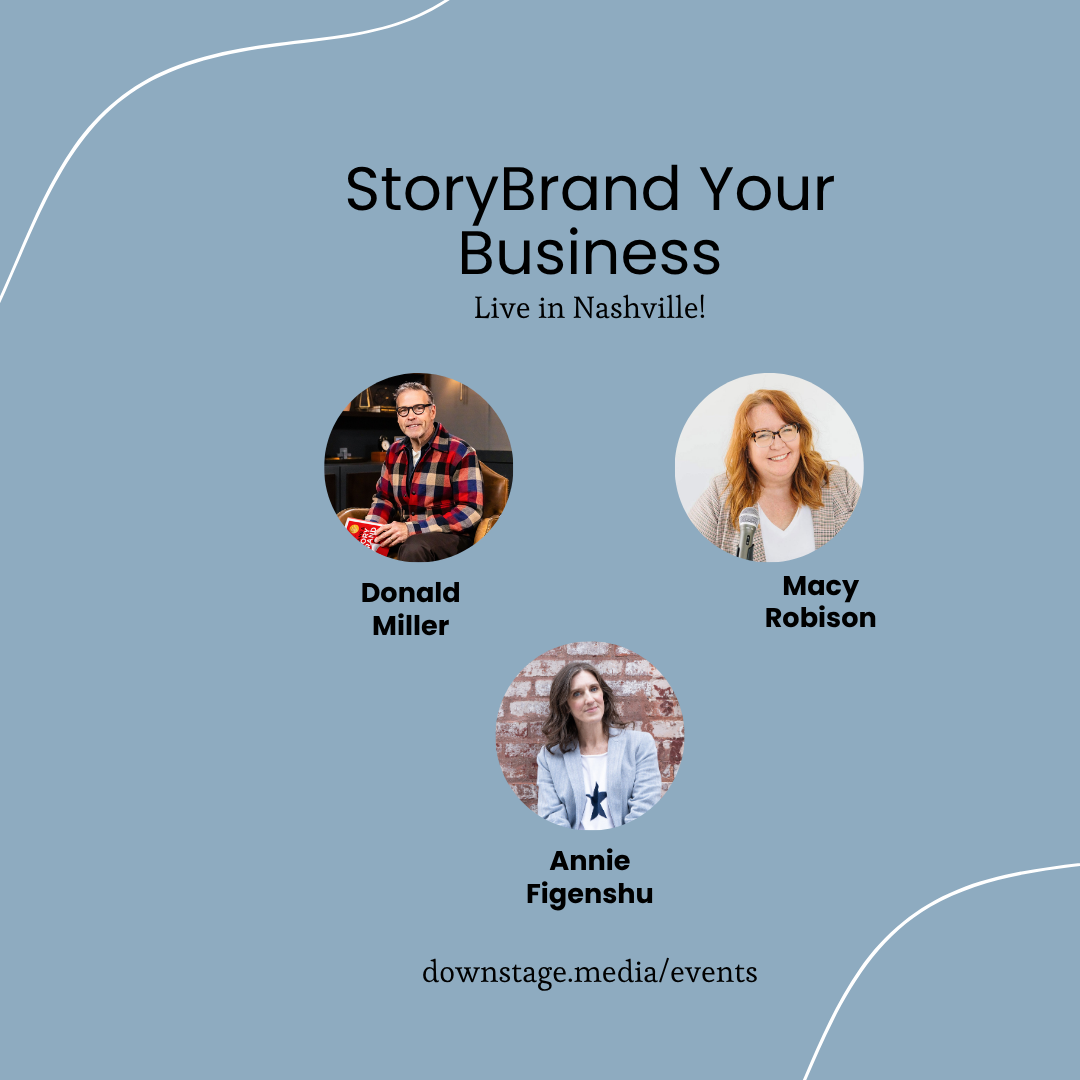
— Nashville, TN —
StoryBrand Your Business
A Hands-On Messaging Workshop with Donald Miller, Facilitated by Annie Figenshu
Spark (Downtown Nashville)
In a market flooded with noise, your brand has to stand out to survive.
Once you get your message right, sales will follow, because customers will understand what’s in it for them. In this workshop, you’ll create a short, simple message that removes confusion. When you stop making customers think, they start buying.
You lose clients when you over-explain what your firm offers. It’s easy to do because it’s hard to encapsulate everything you do succinctly. In this session, you’ll learn what prospects need to hear so you can go into every conversation confident. Ultimately, you make it easier for the right prospects to say yes to you.
Can’t attend live? Reserve your spot anyway. The session will be recorded and sent to everyone who registers.
Let your message get into rooms before you do
You won’t be in every conversation that leads to your next engagement. In fact, some of the most important conversations about your leadership development firm may happen when nobody from your company is there.
A past client recommends you to a colleague. An HR leader forwards your proposal to the CFO. Someone who heard you speak mentions you during an executive meeting. A contact you met six months ago suddenly has the exact problem you talked about.
In those moments, you don’t have another 20 minutes to explain your methodology. You have whatever they remember.
So give people words worth remembering.
Your message doesn’t need to contain everything your firm does. It needs to give the right person enough to understand the problem you solve, remember why your firm matters, and repeat the idea to someone else.
Because your leadership development firm can’t be in every room. But your message can.
If explaining your leadership development firm has gotten more complicated as your work has grown, Downstage Media can help you find the words you want your prospects, clients, and team to know by heart.
Should you use a StoryBrand BrandScript or the PEACE Framework? The answer depends on what you’re trying to accomplish. Learn when to use each framework, how they work together, and why understanding the difference can help you create better marketing, faster.
Businesses assume they need a bigger audience. But many customers tune out much earlier than that. It just isn’t clear to them what the business does or why it matters to them. This post breaks down how messaging friction slows down sales, referrals, and conversions, and how to spot it before it costs you more business.
Most businesses aren’t losing customers because their product is bad. They’re losing customers because their marketing is too hard to understand. Downstage Media’s upcoming live session, How to Talk About Your Business So People Actually Buy, will teach founders and B2B business owners how to simplify their talking points so customers engage faster and buy with more confidence.

If your marketing feels scattered, you’re not alone. Most experts, founders, and speakers work way too hard for far too little traction because their message isn’t clear. This guide walks you through how to use a StoryBrand BrandScript to simplify your message, strengthen your content, and make marketing finally feel doable.
If you keep calling your work “consulting” or “just working with me,” you are shrinking the perceived value of your expertise. The right name turns a loose idea into a structured offer that clients understand, remember, and trust. This post shows you how to name your offers and processes so they feel valuable, future ready, and easier to sell. Keep reading if you want clients to say yes faster.

Confused about StoryBrand Certified Guide vs Coach? Here’s what changed, why it changed back, and what it actually means for your marketing.
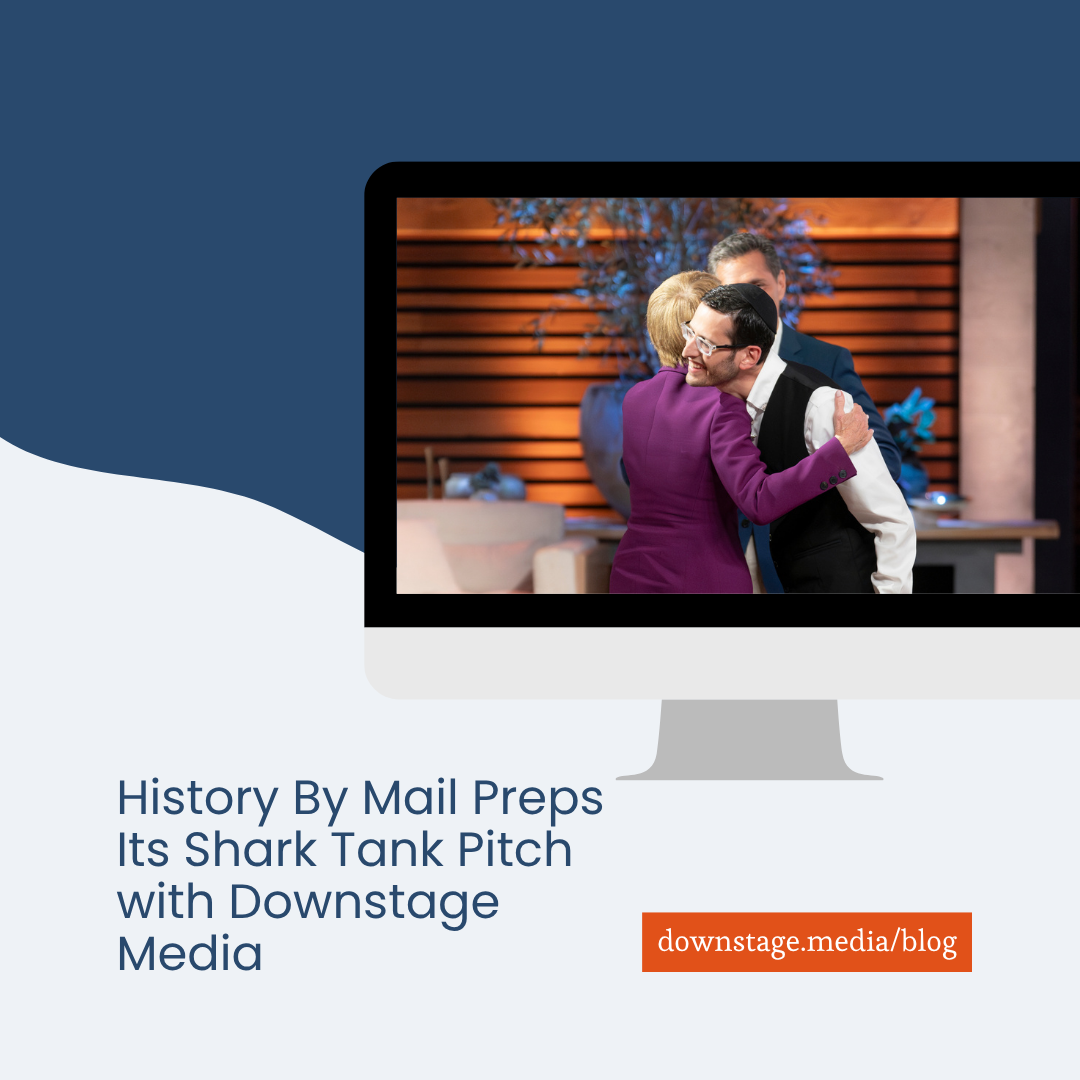
When Ari Siegel, founder of History By Mail, landed a coveted spot on Shark Tank, he turned to Downstage Media for help crafting a pitch that would resonate with both the Sharks and millions of viewers. Here’s how we shaped the message, rehearsed every word, and got ready for a once-in-a-lifetime moment on national TV.

Service-based businesses often overlook holiday marketing, but with the right strategy, you can stand out, boost engagement, and increase revenue. By focusing on what your clients need for the new year and automating your marketing, you’ll position your business for long-term success. Don’t let the season pass you by—take charge of your holiday campaign today!

Get your email marketing ready for the holiday rush with a fully optimized email funnel before Halloween. Personalization is the key to boosting engagement and driving sales, as Mailchimp’s "This Holiday, It’s Personal" report shows that targeted emails can increase open rates by 29%. Start now and let your automated email campaigns work seamlessly through the busiest shopping season, leaving you free to focus on your business.

Discover how to use AI to streamline your content creation without losing the clarity that the StoryBrand framework provides. In this post, I share five steps to train AI on your brand voice and offerings, helping you create customer-focused content that converts while saving you time.

The Power of a Clear Brand Message: It's not easy to connect with your audience right now. Discover how a clear and compelling brand message can transform your business. Learn why a clear message drives revenue. Plus, learn what you must do before, during, and after you craft your brand message so you can get the most out of your marketing.

Struggling with inconsistent messaging and low engagement in your email marketing? Discover how a BrandScript can transform your Mailchimp campaigns. Learn how clear, compelling messaging can boost open rates, click-through rates, and strengthen your brand identity. In this blog post, I'll share practical steps to implement a BrandScript and real-life success stories that prove its impact. Ready to elevate your email marketing strategy? Read on to find out how!

Ever struggled to explain what your business does in a few seconds? You're not alone! A strong one-liner is your secret weapon for capturing attention and sparking curiosity. In this post, we explore the importance of a one-liner and how our Pitch Perfect One-Liner Workshop can help you craft a compelling message that resonates. Learn about common challenges, our proven framework, and hear success stories from those who’ve transformed their business communication. Don’t miss this opportunity to make a memorable impression and elevate your marketing game!

Marketing budgets are tight right now. A recent Gartner survey of 395 CMOs and marketing leaders shows the average 2024 marketing budgets have dipped to 7.7% of overall company revenue, down from last year's 9.1%. That means that you have to be absolutely clear on how to make the most of your marketing to make it count.
In this blog post, I’m going to talk about the StoryBrand Marketing Livestream as a way to get the most out of your marketing dollars for the rest of the year.

Building customer relationships. Growing audience. Growing customer relationships. Building audience. That’s the marketing mantra for many companies. If you’re not building relationships with your current customers, you are always on the lookout for new ones. And if you’re always on the lookout for new customers, you are missing out on opportunities to keep your customers coming back to you.
Let’s break down the final stage of the 3-Stage Marketing Strategy. Here we’ll discuss ongoing content and sales so that you know what to focus on in your marketing in order to build relationships and grow audiences. Or, is it the other way around?

Every makeup kit needs a good foundation and so does every marketing strategy. Stage 1 of the 3-Stage Marketing Strategy is all about the foundation your brand needs to put its best face forward. Learn the initial steps to take for lasting, sustainable success.

When you’re running your own marketing, it’s hard to know where to focus first. Making a haphazard choice can set you back months - and thousands of dollars. In this blog post, you’ll learn the three key stages every successful marketing strategy needs - from foundational elements to automated systems to ongoing content. With these in place you will reach new audiences and foster engagement with old ones. All without having to worry if you’re putting your efforts in the wrong place.

Among one of the most annoying daily occurrences in work is knowing you have a piece of information somewhere on your computer and can’t find it. It becomes especially frustrating when you’re trying to come across it in a hurry: the font you need to make today’s social media image, or the logo you have to submit to the podcast producer. A Brand Identity Playbook helps you have all of this information - plus vital messaging for your organization - in one place. Let’s break down how to create one, and what needs to go into it.

You wouldn’t try to make a Thanksgiving meal with all new recipes and kitchen tools - you’d be frazzled and scrambling before you even put the turkey into the oven. You shouldn’t make marketing materials with all new platforms and software, either. Here’s a list of the tried and true tools, that I’m grateful for this season. Plus, a few new ones, since it’s always fun to have something new to keep things fresh at the table.

Most people are wasting money on advertising and don't even know it. This issue is a serious problem and needs to stop. In this article, Evan Cox from Caffeine Marketing, unpacks ten of the most common ways people waste money on advertising.
If your marketing isn’t connecting with your audience you might need a better messaging. Here’s how to tell if that’s the issue, and what to do if it is.

It can be easy to feel envious of people enjoying the long days of summer when you're trying to get your projects off the ground. A new offering from Downstage Media is designed to put your marketing on autopilot because after the past two years you deserve a great summer.

You keep publicizing your work but your audience ignores you. Find out what BUGS stands for, why every offer needs it, and how it’ll have you crawling with buyers.

The prices for online courses and coaching programs varies wildly - with some as low as $47 and others are high as $5000. So when you’re considering an online course and a coaching program, it’s important to know what’s in store, and how it compares to other comparable courses. Downstage Media has partnered with Business Made Simple to offer a suite of online courses and a marketing mentorship as well. Here’s what you can expect to pay, and what is included, and how it compares in the marketplace.
Your message needs to work even when you’re not in the room. Learn why it’s important to use words someone else can understand, repeat, and share.
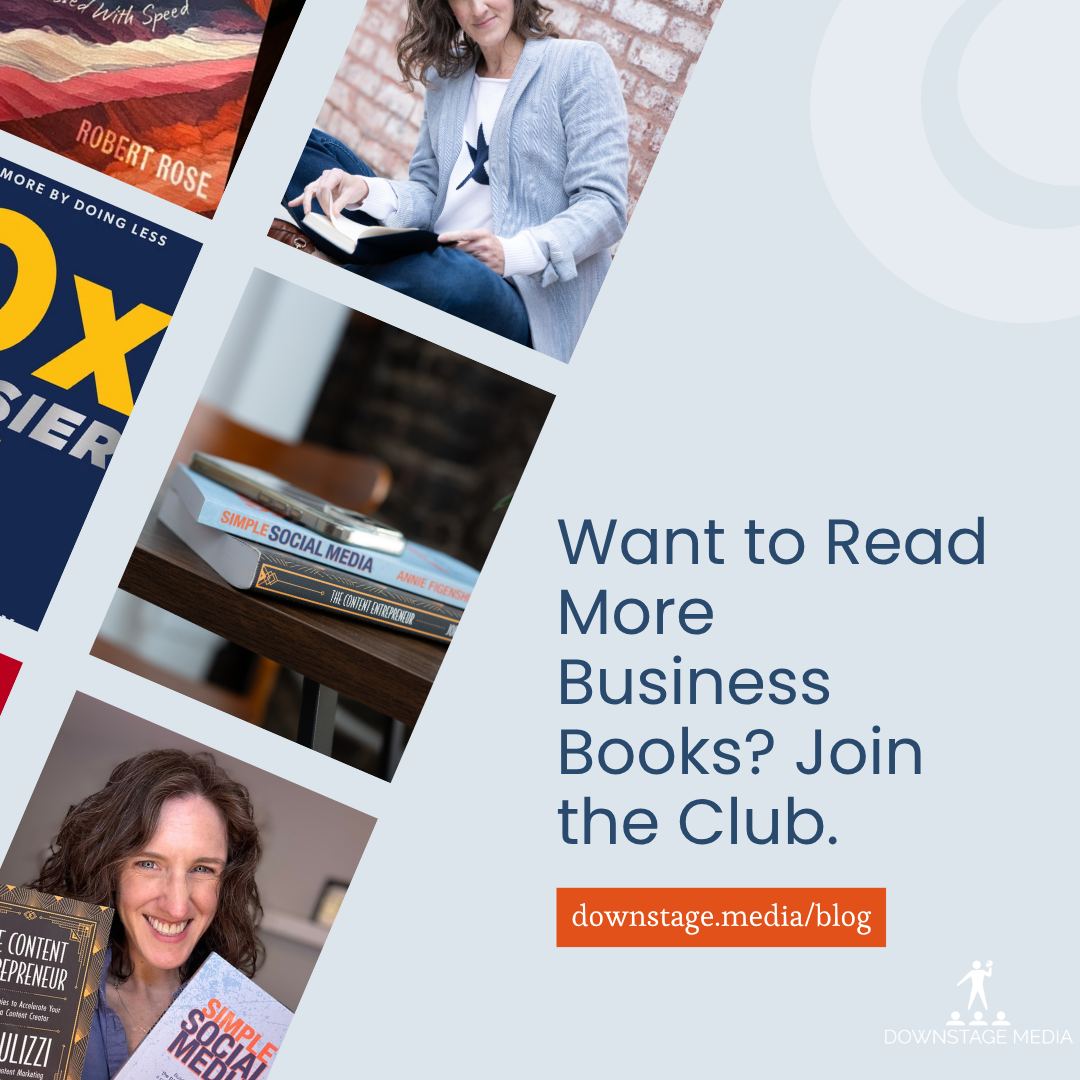
You want to read more business books, but running a business keeps pushing them down the list. The On Book Business Book Club gives you a reason to read, smart business owners to discuss the ideas with, and new ideas you can put to work in your business.

A packed workday doesn’t necessarily mean you’re growing your consulting business. Here are three activities to make time for more often than not so you can create revenue, stay in front of prospective clients, and develop relationships that lead to new opportunities.
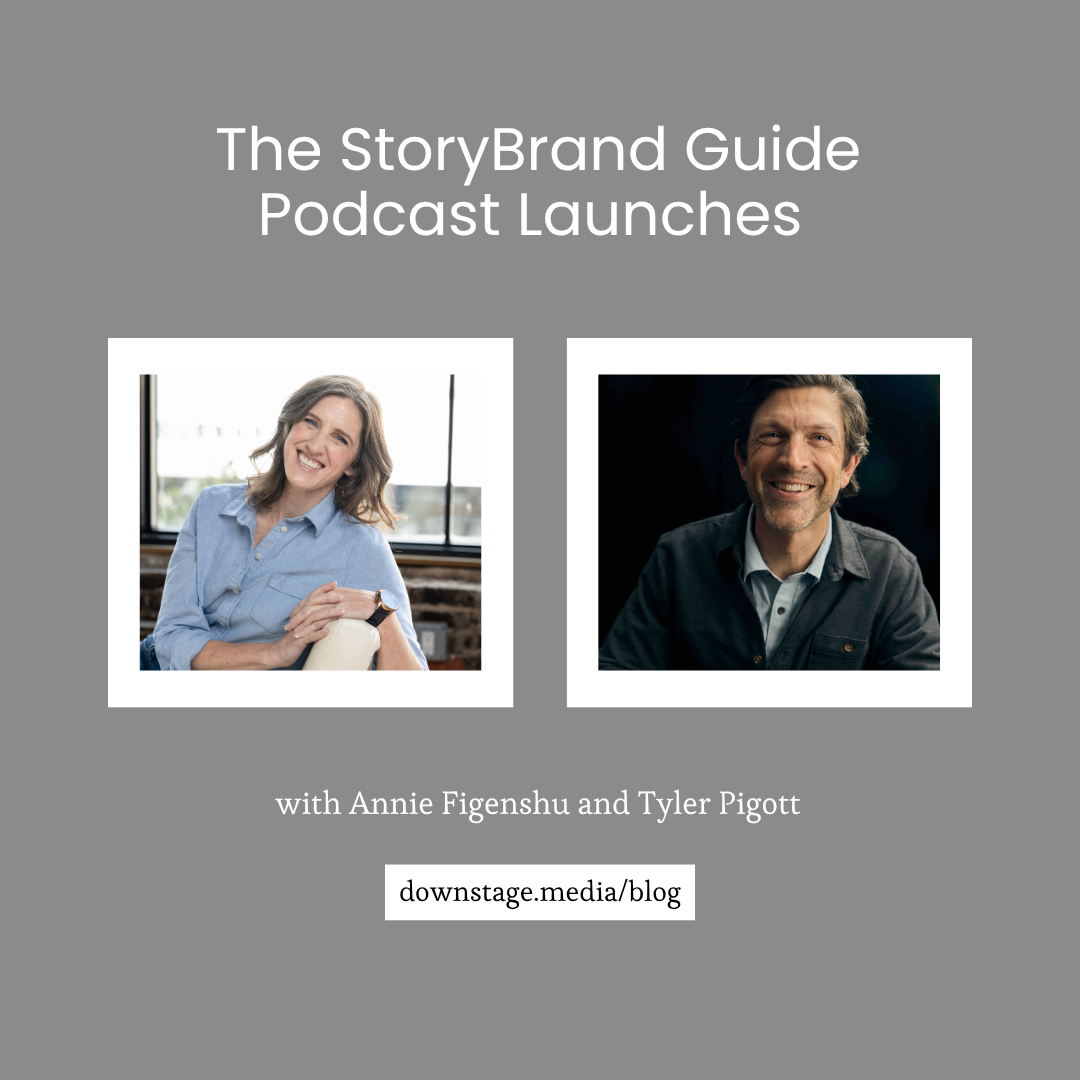
StoryBrand Guides have access to keynotes, frameworks, and tools designed to help them grow their businesses. The challenge is figuring out how to turn those resources into client work and revenue. That’s what inspired an internal StoryBrand pilot called What Does This Make Possible? Today, that idea has evolved into the StoryBrand Guide Podcast, co-hosted by Annie Figenshu and Tyler Pigott.
Should you use a StoryBrand BrandScript or the PEACE Framework? The answer depends on what you’re trying to accomplish. Learn when to use each framework, how they work together, and why understanding the difference can help you create better marketing, faster.
Businesses assume they need a bigger audience. But many customers tune out much earlier than that. It just isn’t clear to them what the business does or why it matters to them. This post breaks down how messaging friction slows down sales, referrals, and conversions, and how to spot it before it costs you more business.
Most businesses aren’t losing customers because their product is bad. They’re losing customers because their marketing is too hard to understand. Downstage Media’s upcoming live session, How to Talk About Your Business So People Actually Buy, will teach founders and B2B business owners how to simplify their talking points so customers engage faster and buy with more confidence.
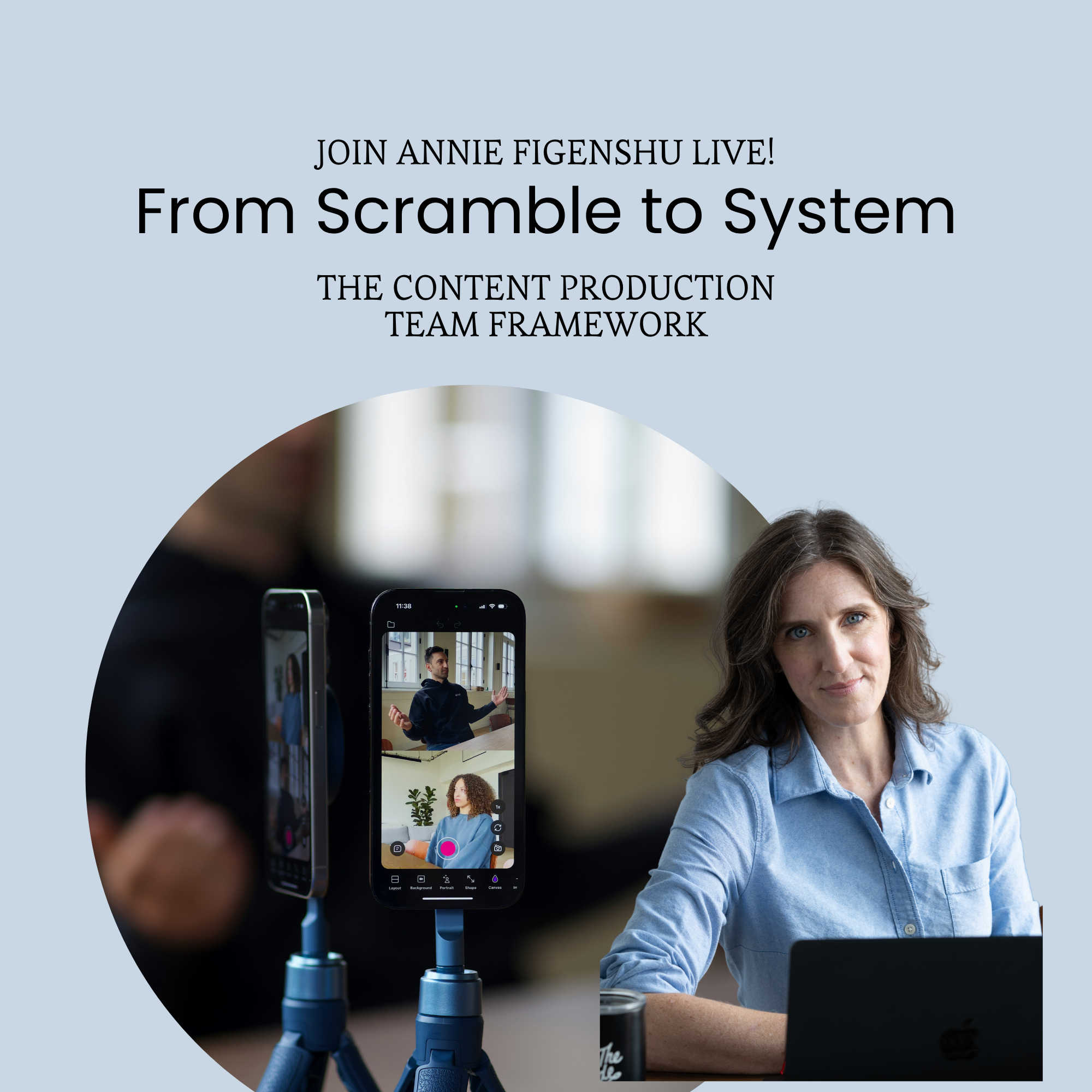
Most founder-led brands generate ideas faster than their teams can publish them. In this live workshop, Annie Figenshu introduces the Content Production Team framework, a simple system that helps small teams publish content more consistently without overwhelming the organization.
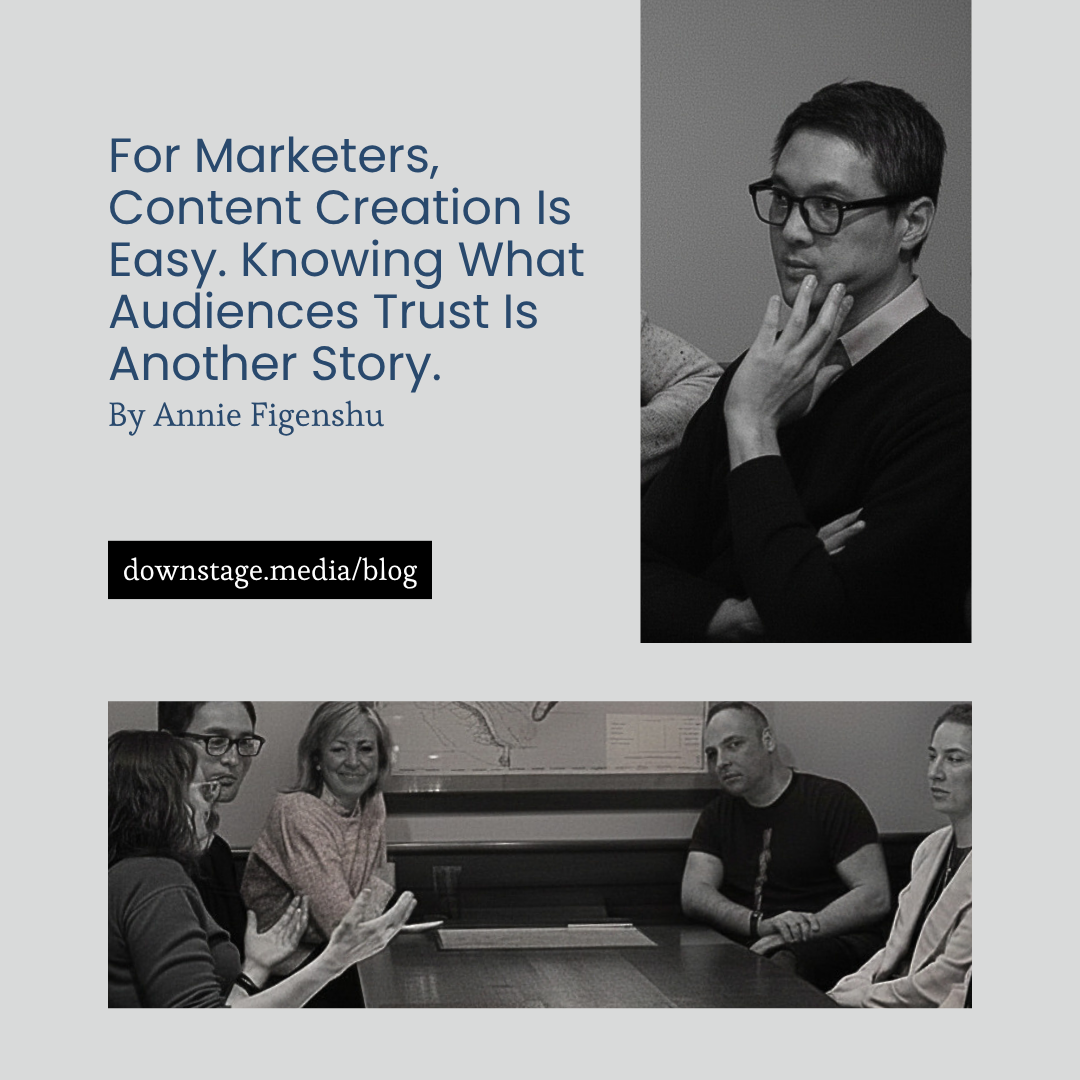
Content is easier to create than ever, and audiences are skeptical of its authenticity. If brands don’t adjust, their content will continue to be ignored. This post shares insights from The Marketing Algonquin, a private roundtable of New Jersey-based marketers, on the shift from creation to curation so your content earns what’s hardest to win: audience trust.
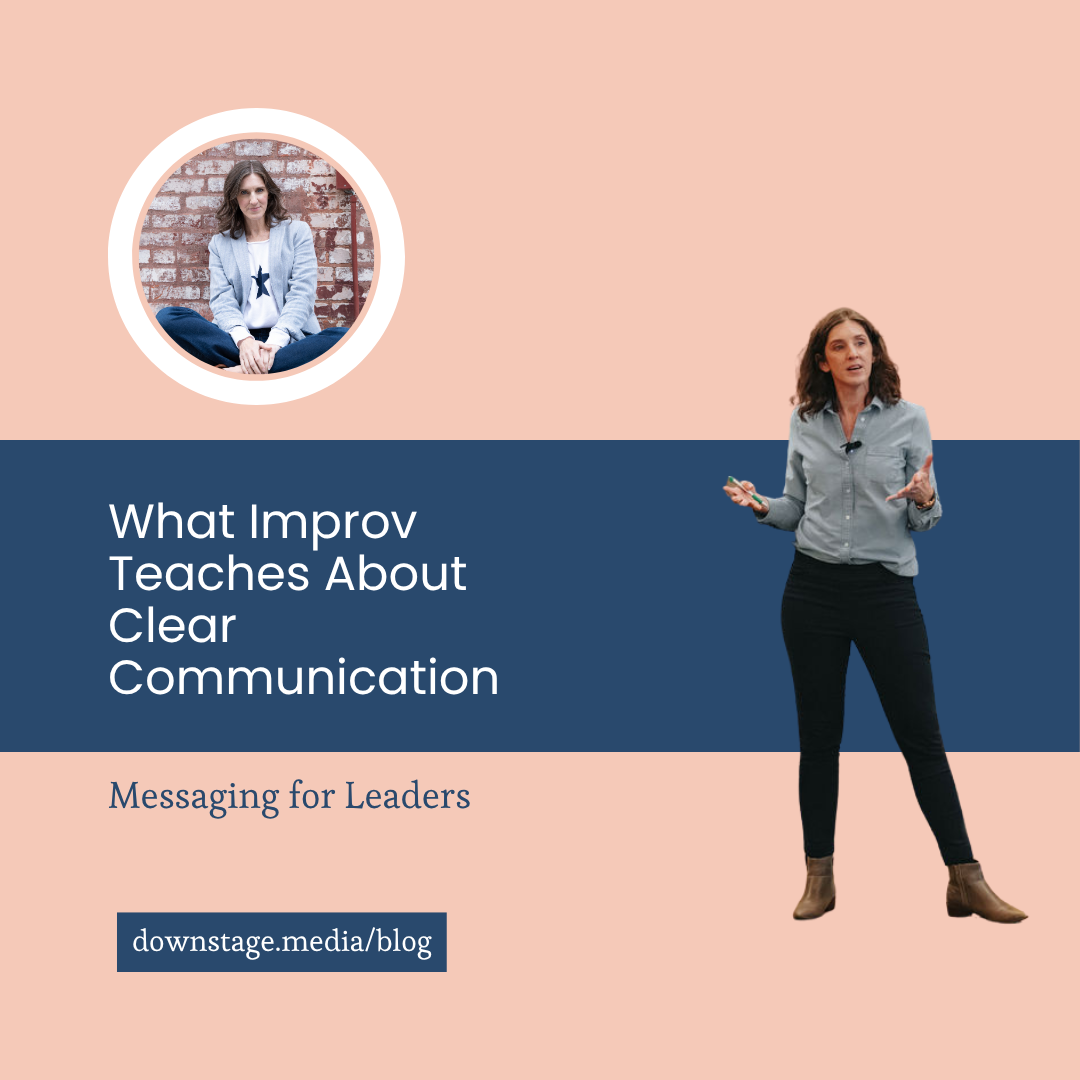
Most leaders have a hard time communicating clearly, which leads to checked out teams and missed opportunities. This post breaks down how improv principles fix that, so your ideas actually land and your audience gets on board.
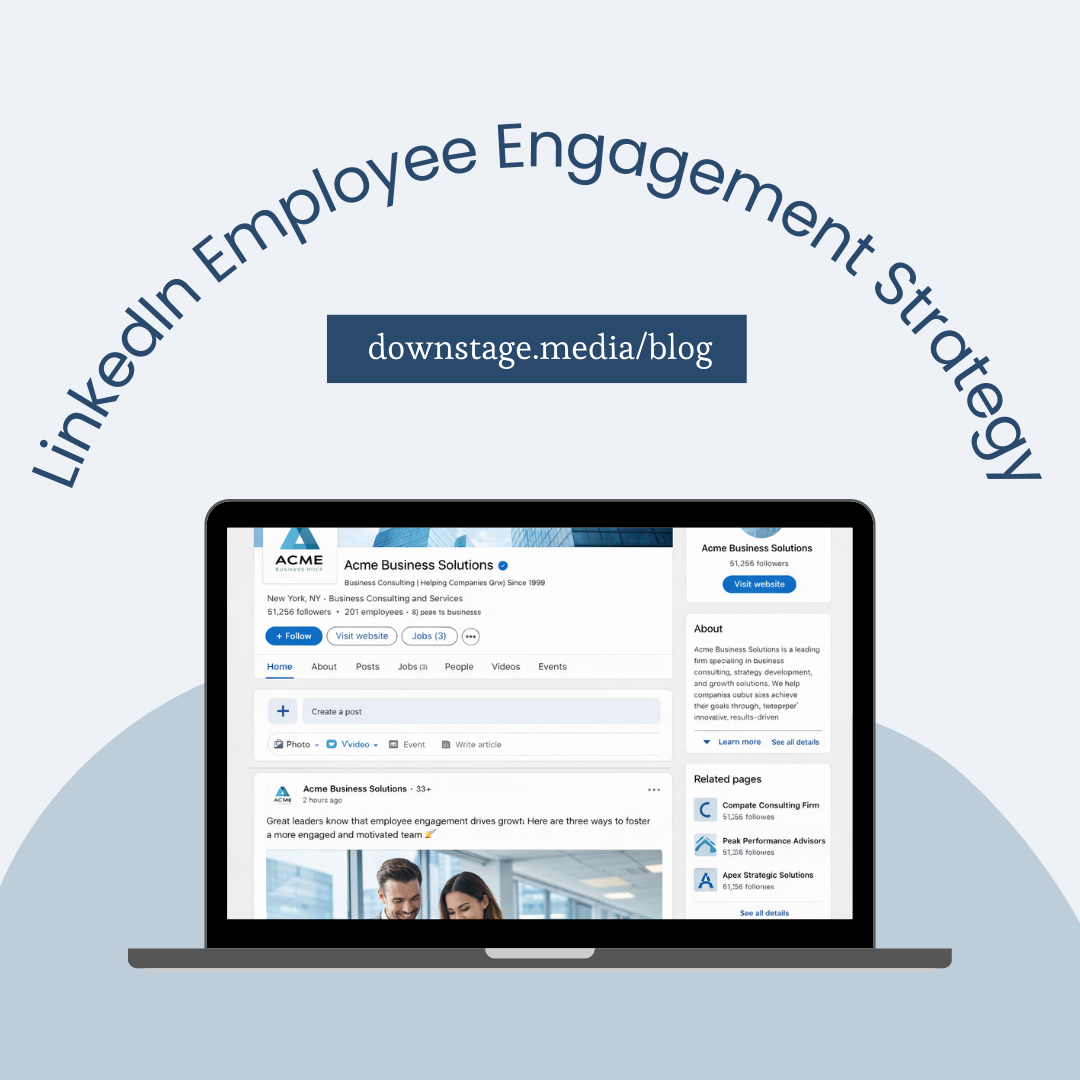
Your LinkedIn Company Page isn’t struggling because you’re posting too little. It’s struggling because LinkedIn prioritizes people over logos. Here’s how employee engagement multiplies reach and helps your content travel further.

AI adoption is accelerating, but without clear positioning and documented messaging, it simply scales confusion. Drawing on new books by Allison Shapira, David Newman, and Erika Heald, this post explains why AI strategy for leaders starts with judgment, differentiation, and strong content foundations.
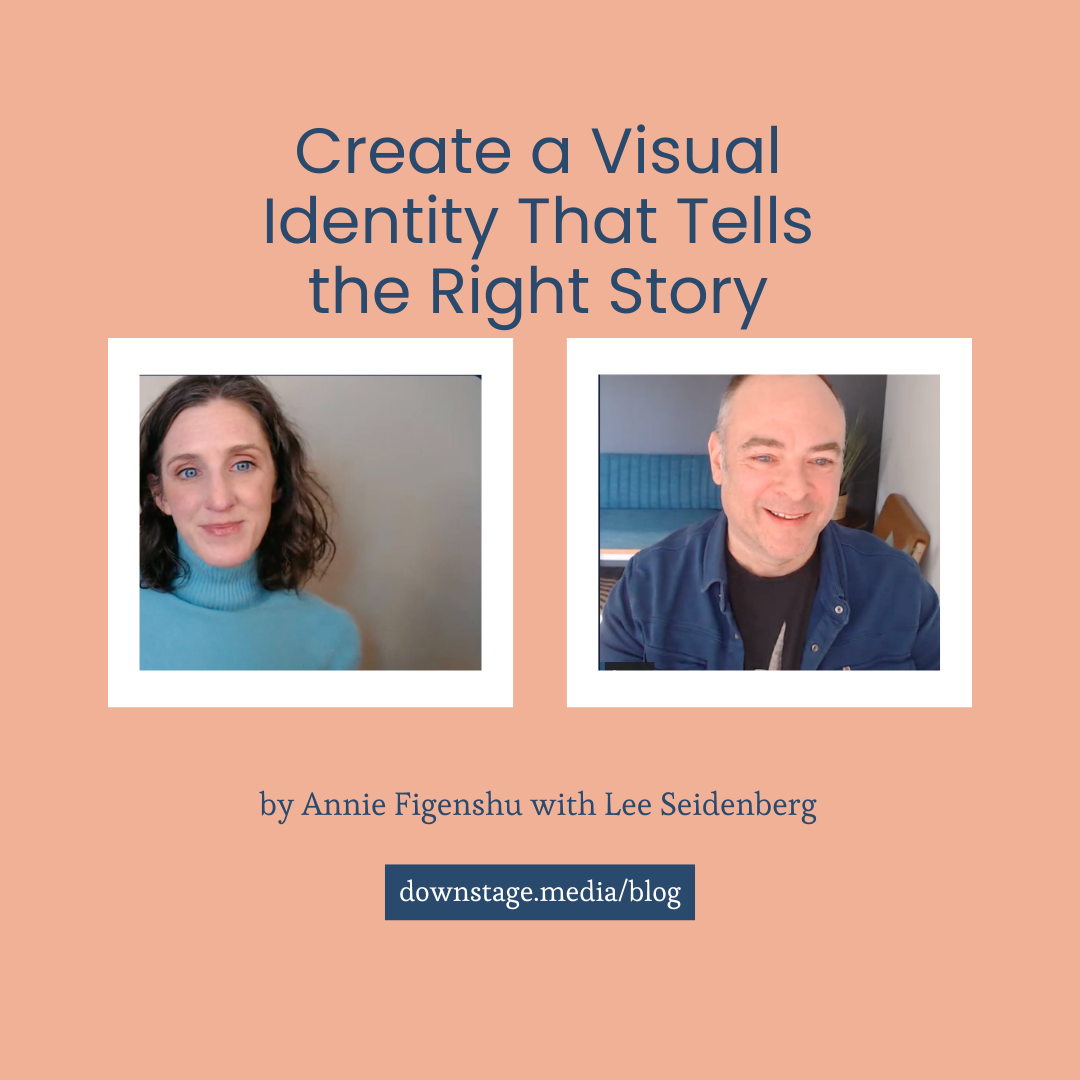
If your visual identity doesn’t match your message, people feel the disconnect before they understand why. In this conversation with designer Lee Seidenberg, we break down how to create a visual identity for thought leaders that reinforces authority instead of diluting it. Read on.
Being everywhere with your marketing sounds ambitious, but it often leaves teams stretched too thin and messages unclear. A focused marketing strategy helps people understand what you’re known for and gives your team room to do better work.

Budgets are tighter, trust is harder to earn, and content alone doesn’t carry the same weight it used to. This post explores why your network has become part of what clients are really buying, and how intentional relationship-building increases trust, retention, and long-term value.
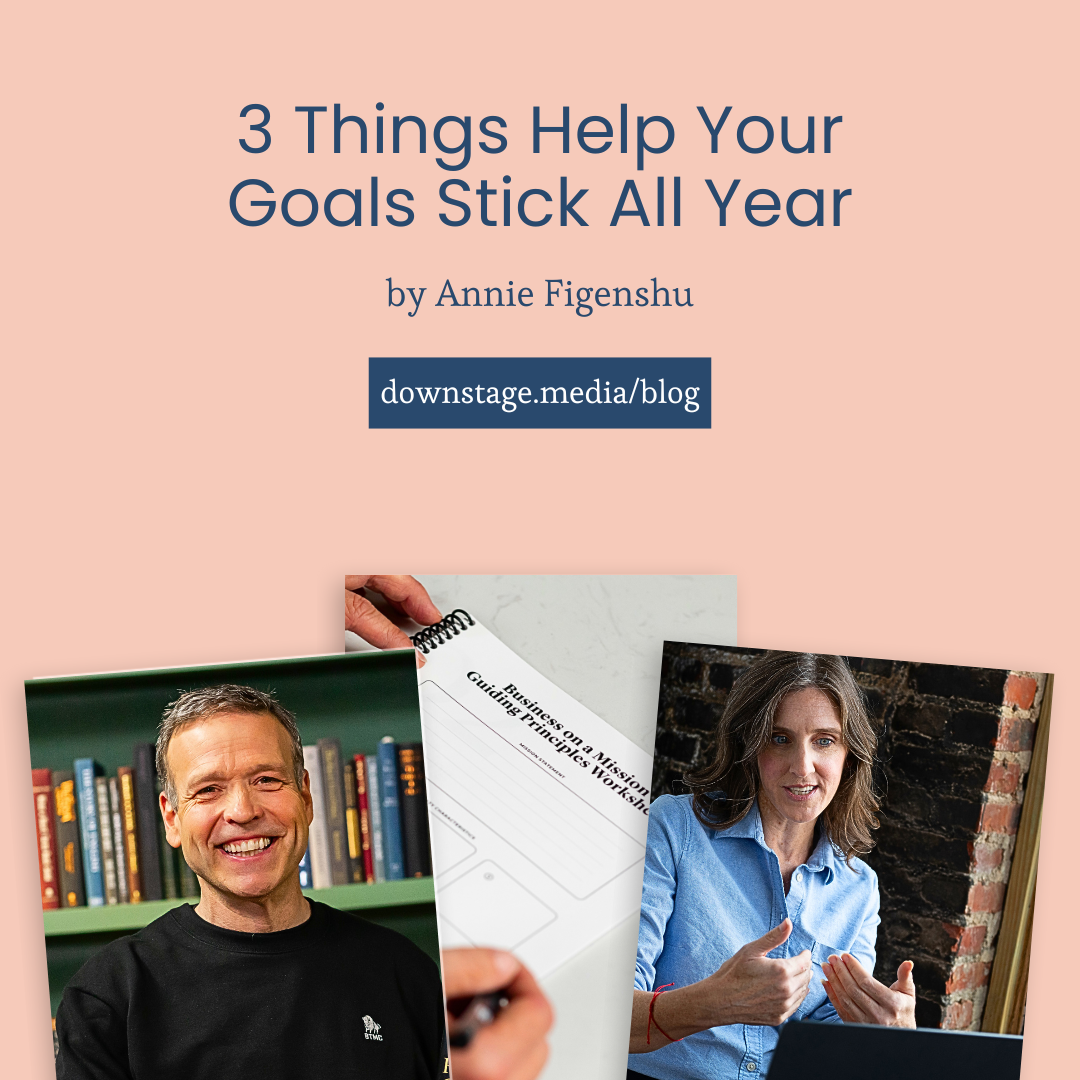
New goals are easy to set in January. What’s harder is sticking to them when motivation fades later in the year. This post breaks down the three supports every business needs so progress doesn’t disappear in February, May, or the middle of summer.
If your email campaigns feel unpredictable, it’s probably not a tech issue. It’s a list issue. This post breaks down why cold emailing quietly damages deliverability, what spam filters actually look for, and how to rebuild your email program on permission, trust, and long-term visibility.
If your marketing feels scattered, you’re not alone. Most experts, founders, and speakers work way too hard for far too little traction because their message isn’t clear. This guide walks you through how to use a StoryBrand BrandScript to simplify your message, strengthen your content, and make marketing finally feel doable.
Every thought-driven brand faces the same challenge: the ideas come fast, but the content process lags behind. The Content Production Team helps you choreograph the content by defining who does what so your thought leadership becomes consistent, scalable, and effective.
If you’re a thought leader or the face of your brand, you’ve probably invested in a beautiful website that may not convert the way you want. In this post, web designer Kristin Madeja shows you how direct response marketing principles can help your site move people from “This looks nice” to “I’m ready to book.” You’ll learn about clarity, calls to action, testing, and photography, so your audience takes action.
Many thought leaders let their company blogs go quiet, which means their best ideas disappear the moment they speak them. New research shows exactly why 2026 is the year to revive a neglected blog and how content created with strategy can strengthen authority while influencing AI search results. This post shows you what works now and simple steps to bring your blog back to life.
If you keep calling your work “consulting” or “just working with me,” you are shrinking the perceived value of your expertise. The right name turns a loose idea into a structured offer that clients understand, remember, and trust. This post shows you how to name your offers and processes so they feel valuable, future ready, and easier to sell. Keep reading if you want clients to say yes faster.

Every thought-driven brand faces the same challenge: the ideas come fast, but the content process lags behind. The Content Production Team helps you choreograph the content by defining who does what so your thought leadership becomes consistent, scalable, and effective.
Email marketing has gotten more sophisticated. So even platforms like Mailchimp that may have seemed simple when you first signed up, require a little know how in order to get your money’s worth out of it. This blog post breaks down why working with a Mailchimp Pro Partner can help you get the results that you want so you can use email marketing to gain and retain clients.
You keep putting off blogging because it feels like too much work, and as a result, prospects lose interest and clients drift away. In this post, you’ll learn how to blog in a way that saves time, builds trust, and makes follow-up effortless so you can keep the clients you have and attract the ones you want. If you don’t blog yet, you’ll learn exactly how to start. If you already blog, you’ll see how to make it even more effective and how to contribute to Orbit Media’s annual blogging survey. Read the full post to start.

The Content Entrepreneur Expo isn’t just another industry event. It’s where creators, consultants, and founders go to sharpen their content strategy, meet real collaborators, and build businesses with staying power. Annie Figenshu—author of Simple Social Media and co-author of The Content Entrepreneur—will be there in Author Alley, ready to connect.
Growing your email audience shouldn’t feel like a guessing game. If you’re not sure what to offer, where to promote it, or how to keep it fresh, you’re not alone. In this post, you’ll get a simple, doable plan to build a healthy list filled with the right people. The kind of list that keeps your audience engaged, your content working, and your business moving forward.

Engagement posts are a smart way to build brand awareness. Used well, they boost visibility, train the algorithm, and keep you top of mind.
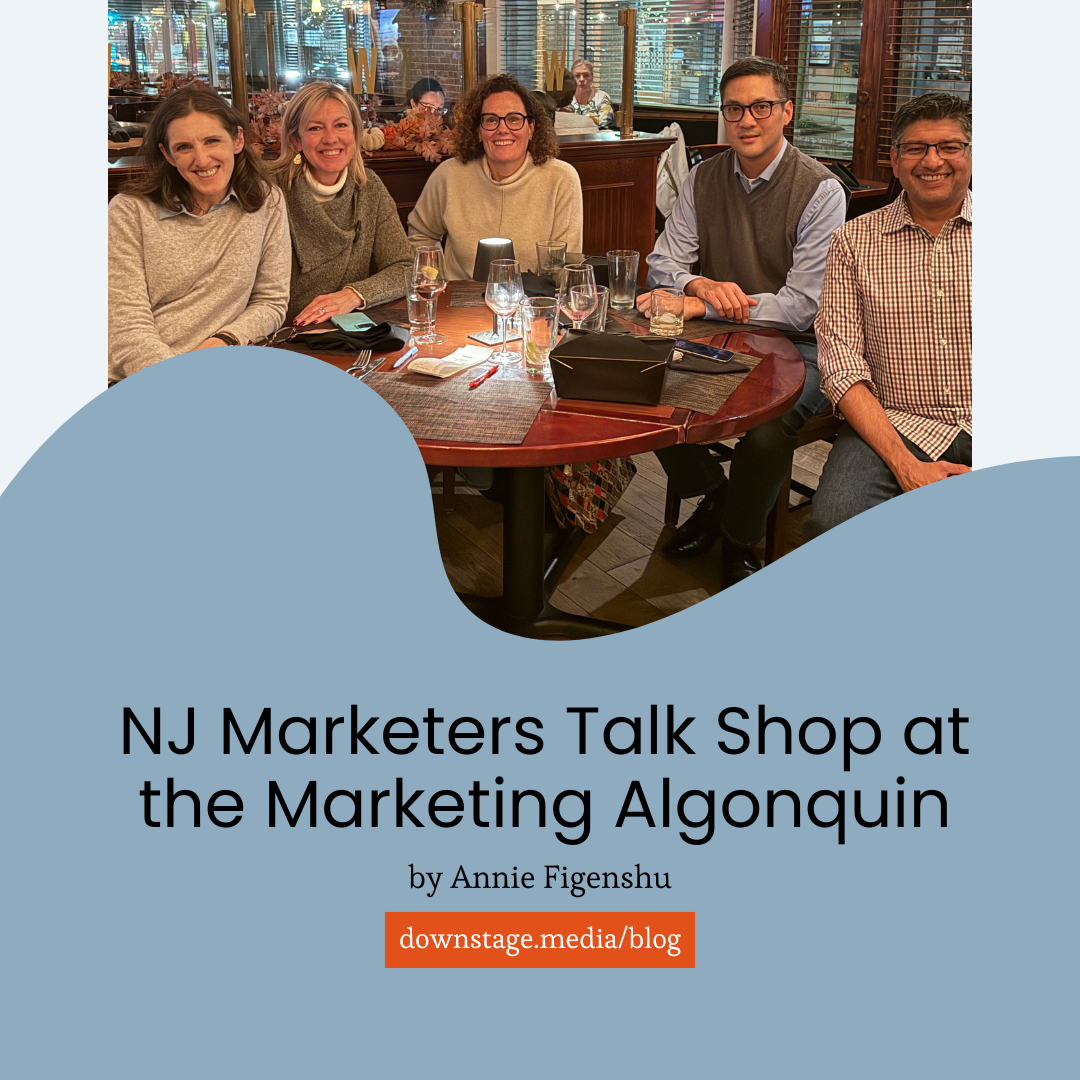
A cozy table. Sharp minds. And one very good reason to keep talking marketing offline. Here’s what happened at the first Marketing Algonquin.

You built a beautiful Squarespace website. The messaging is solid, the visuals are on point—but the traffic? Crickets. If you’re wondering why no one’s finding your site (and what to do about it), this post breaks it down. Learn why long-form content still matters, how blogging can be your website’s best traffic engine, and what a smart strategy really looks like—especially for Squarespace users who’ve done the brand work but still feel invisible.
Content is easier to create than ever, and audiences are skeptical of its authenticity. If brands don’t adjust, their content will continue to be ignored. This post shares insights from The Marketing Algonquin, a private roundtable of New Jersey-based marketers, on the shift from creation to curation so your content earns what’s hardest to win: audience trust.
AI adoption is accelerating, but without clear positioning and documented messaging, it simply scales confusion. Drawing on new books by Allison Shapira, David Newman, and Erika Heald, this post explains why AI strategy for leaders starts with judgment, differentiation, and strong content foundations.
Being everywhere with your marketing sounds ambitious, but it often leaves teams stretched too thin and messages unclear. A focused marketing strategy helps people understand what you’re known for and gives your team room to do better work.
If your marketing feels scattered, you’re not alone. Most experts, founders, and speakers work way too hard for far too little traction because their message isn’t clear. This guide walks you through how to use a StoryBrand BrandScript to simplify your message, strengthen your content, and make marketing finally feel doable.
Every thought-driven brand faces the same challenge: the ideas come fast, but the content process lags behind. The Content Production Team helps you choreograph the content by defining who does what so your thought leadership becomes consistent, scalable, and effective.
You keep putting off blogging because it feels like too much work, and as a result, prospects lose interest and clients drift away. In this post, you’ll learn how to blog in a way that saves time, builds trust, and makes follow-up effortless so you can keep the clients you have and attract the ones you want. If you don’t blog yet, you’ll learn exactly how to start. If you already blog, you’ll see how to make it even more effective and how to contribute to Orbit Media’s annual blogging survey. Read the full post to start.
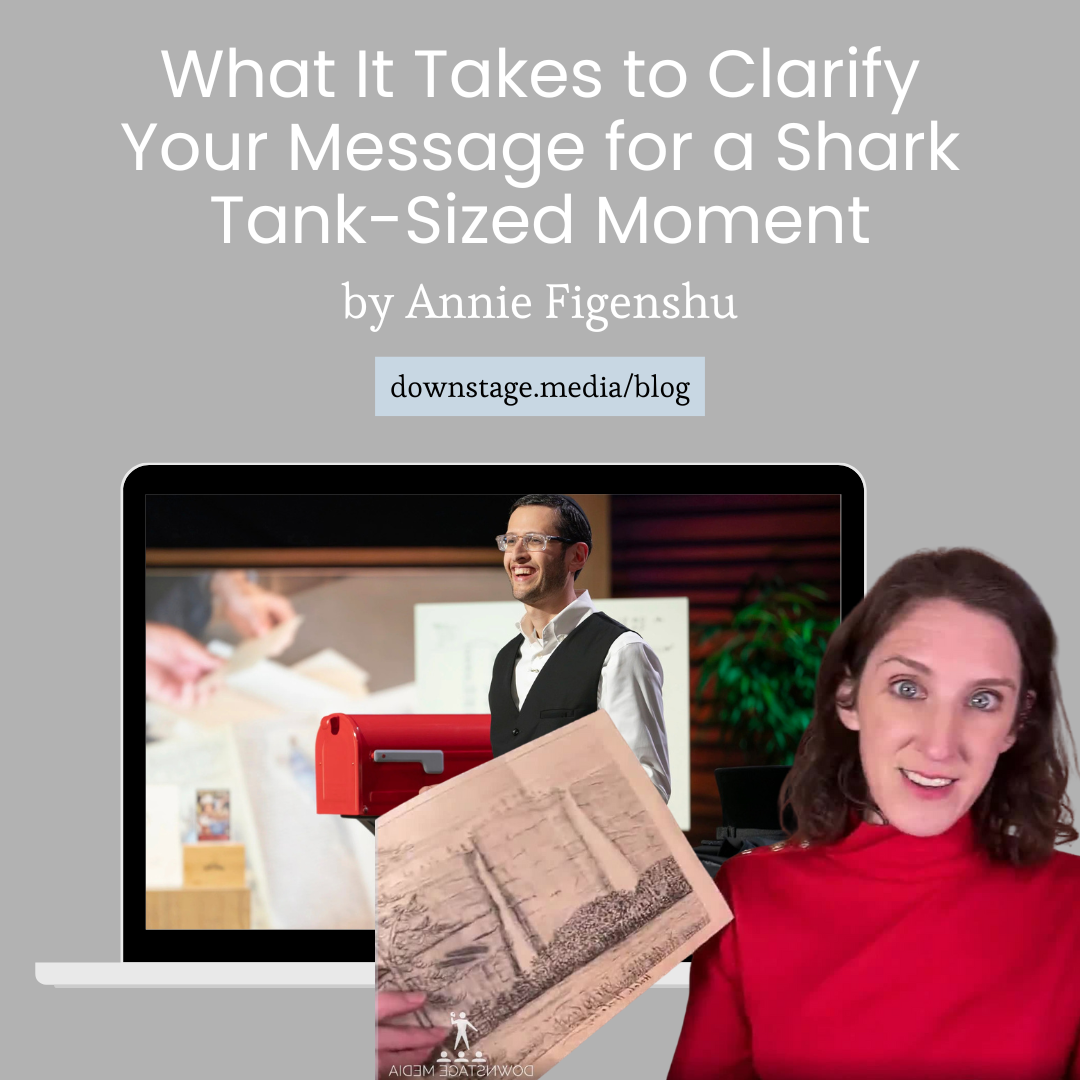
High-stakes moments don’t give you time to clarify what you meant. When a message isn’t sharp, even a strong idea can lose the room. This post breaks down what happened in the Tank, the messaging work History By Mail did with Downstage Media ahead of the pitch, and what founders can learn about preparing their message before the pressure hits.
When Ari Siegel, founder of History By Mail, landed a coveted spot on Shark Tank, he turned to Downstage Media for help crafting a pitch that would resonate with both the Sharks and millions of viewers. Here’s how we shaped the message, rehearsed every word, and got ready for a once-in-a-lifetime moment on national TV.
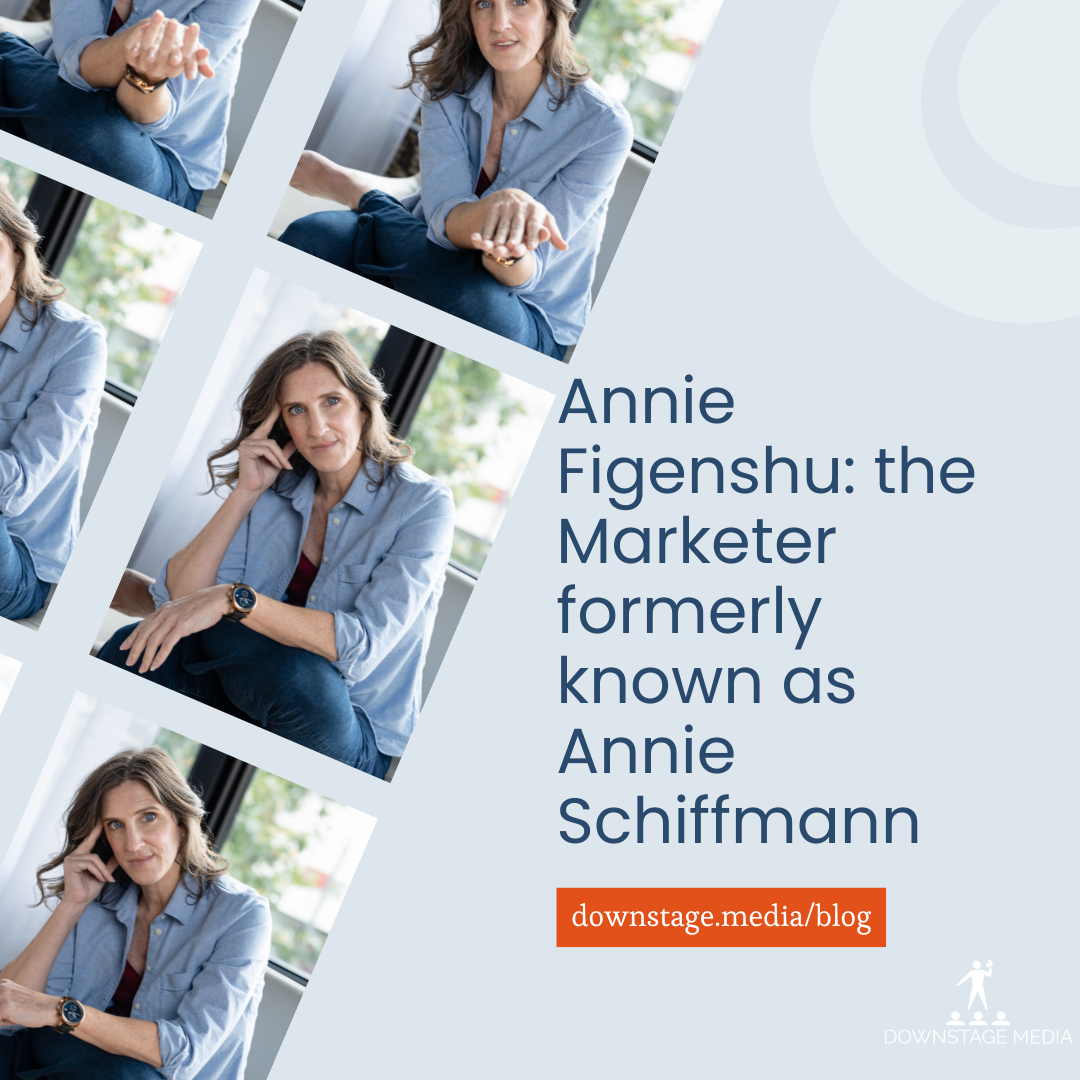
I’ve returned to my maiden name, Annie Figenshu. If you’re searching for Annie Schiffmann or wondering what the name change means, here’s the clear answer and what hasn’t changed about my work.
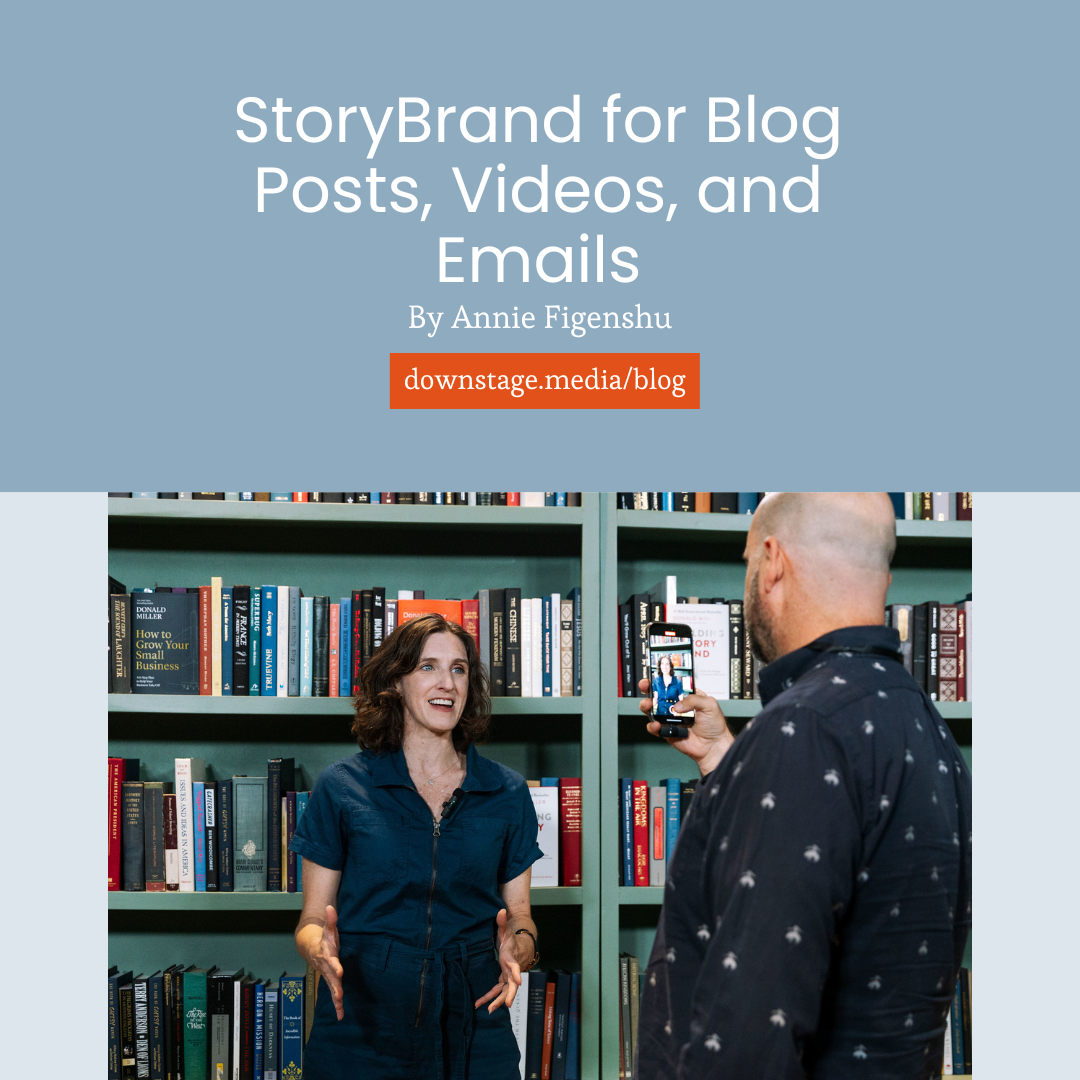
You like how StoryBrand makes your customer the hero, but applying that same thinking to blog posts, videos, and emails is a little murkier. This post shows how to use the StoryBrand framework as a jumping off point for your content marketing efforts. The result is customer-focused content that’s easier to create and more effective at building relationships.
Discover how to use AI to streamline your content creation without losing the clarity that the StoryBrand framework provides. In this post, I share five steps to train AI on your brand voice and offerings, helping you create customer-focused content that converts while saving you time.
Marketing budgets are tight right now. A recent Gartner survey of 395 CMOs and marketing leaders shows the average 2024 marketing budgets have dipped to 7.7% of overall company revenue, down from last year's 9.1%. That means that you have to be absolutely clear on how to make the most of your marketing to make it count.
In this blog post, I’m going to talk about the StoryBrand Marketing Livestream as a way to get the most out of your marketing dollars for the rest of the year.
At Social Media Marketing World 2024 there were 5 sessions about LinkedIn. I watched them all so you don't have to. Here's what you need to know.

Some online summits are a little… thin with speakers pitching more than presenting. It’s hard to know if the Coach Builder Summit is going to be worth carving out two days of your schedule for. Let’s go through what Coach Builder Summit is, plus give you 5 insider tips you may not have considered. When you see more info about it cross your desk, you'll be confident that you thought through your decision.
Get the scoop on why the book Simple Social Media won’t be available on Amazon at first, what to expect when it does become available, and why that is good for you! Learn how SMBs will benefit from this new marketing resource!
You’ve never heard of Creator Economy Expo before. So… is it worth your time? You don’t want to take days out of your business attending an event that won’t yield results for you in the upcoming year. In this blog post, I’ll talk about what it is, why it’s worth considering, and how to get it at a discount. So you can decide if it’s a good fit for you and your brand.
It’s not always clear how you can use StoryBrand on your social media. Much of the StoryBrand Framework is based around using marketing to increase sales - but social media is different than a website. And no one wants to turn their social media channels into a spammy billboard. Here you’ll learn a StoryBrand-inspired formula for writing copy on your social media posts, as well as different ways to use existing assets in your marketing - lead generators, BrandScripts, and more - in a way that works on social media.

Struggling to get your social media posts noticed? It might not be your content—it’s your strategy. By combining the StoryBrand BrandScript with Downstage Media’s PAGER method, you can create social posts that not only resonate but also drive real results. In this post, you'll learn a step-by-step approach to crafting clear, engaging content that doesn’t turn your feed into an endless ad, but a true engagement tool.

General Content is the “G” of the PAGER method, and it can be the most confusing because it’s the most vague category. But these are the posts that show your audience that you understand who they are and you know how to solve their problems. Read on to understand what these posts are, see them in action, and learn how to implement them into your content mix so you can turn your audience into your community.
It’s time to simplify social media for small businesses and brands. The PAGER Method is a social media strategy that you can easily use on any platform and in any niche. You’ll know what to create, ensure that your content isn’t too salesy, and still promote the events and initiatives that your business needs to survive. Here, get an overview of Downstage Media’s own content method with examples. This is the basis for Annie Figenshu’s book, Simple Social Media.

If you don’t post on social media about your promotions, initiatives, or events your audience won’t know what you have going on business-wise. So you can start to question whether all of the time that you spend posting is worthwhile at all. Here you’ll learn a simple system to create posts that will help you reach your business goals without making your account seem like a salesy billboard.
It can be hard to make the most of your email marketing. You don’t have the time to learn how to send out more than a quick blast but you don’t have the time to learn anything more. Annie Schiffmann is Mailchimp Certified and takes you through how that special training can help you reach your goals for your company.

No one wants to spend time crafting an email that will be ignored. Learn these best practices gleaned from Mailchimp’s Content Optimizer to get your audience to actually read the emails you send out.

The StoryBrand Marketing Livestream is a two day investment in your business. But if you don’t take time to prepare, you could get a low return on that investment. Learn success tips from facilitators who’ve ushered hundreds of attendees through the workshop.

The internet is full of marketing advice, predictions, and trends for the new year. Many of them, though, don’t quite apply to an arts-focused brand. Here, I’ll take some marketing trends for 2022 and filter them through the lens of the performing arts, offering my insights for how brands in the arts can use them now.

You do more copywriting than you think. Any post, email, or webpage where you want a reader to take action counts as copywriting. Unfortunately, lots of copywriting misses the mark which leads to lower clicks, conversions, and sales. In this post, you'll learn simple copywriting tweaks that will personalize, activate, and strengthen your work so you can connect with your audience.
The prices for online courses and coaching programs varies wildly - with some as low as $47 and others are high as $5000. So when you’re considering an online course and a coaching program, it’s important to know what’s in store, and how it compares to other comparable courses. Downstage Media has partnered with Business Made Simple to offer a suite of online courses and a marketing mentorship as well. Here’s what you can expect to pay, and what is included, and how it compares in the marketplace.
Like what we’ve done for your company? Think other organizations need to get their work out there? Here are the easiest ways to leave us a review that will answer the questions our potential clients often have. Whether you prefer to fill in the blanks, tap record, or write on a form, answer these five questions and you’re all done!

Understanding the difference between a hashtag and a handle can instantly strengthen your social media presence. If you’ve been guessing or mixing the two, you’re not alone — and it’s hurting your visibility. This post breaks down both tools in plain English and shows you how to use them strategically so your content is easier to find, easier to engage with, and easier to manage. Keep reading to make your next post clearer and far more effective.
 Annie Figenshu
Annie Figenshu is keenly aware that many companies are pressed for time, and every minute counts. She helps brands make the most of their content marketing so that their hard work is shared with the world. Annie is certified in both StoryBrand and Mailchimp, has two kids with Beatles-themed names, and is afraid to think what a day without coffee would look like.
Your message needs to work even when you’re not in the room. Learn why it’s important to use words someone else can understand, repeat, and share.